
Guide
Old Doors, Older Rules: Tukwila's Insulation Gap
Tukwila homes built 1962-2005 often carry single-layer garage doors from before insulation codes caught up. Here's what that means for your door today.
Local detail
What Local Conditions Do
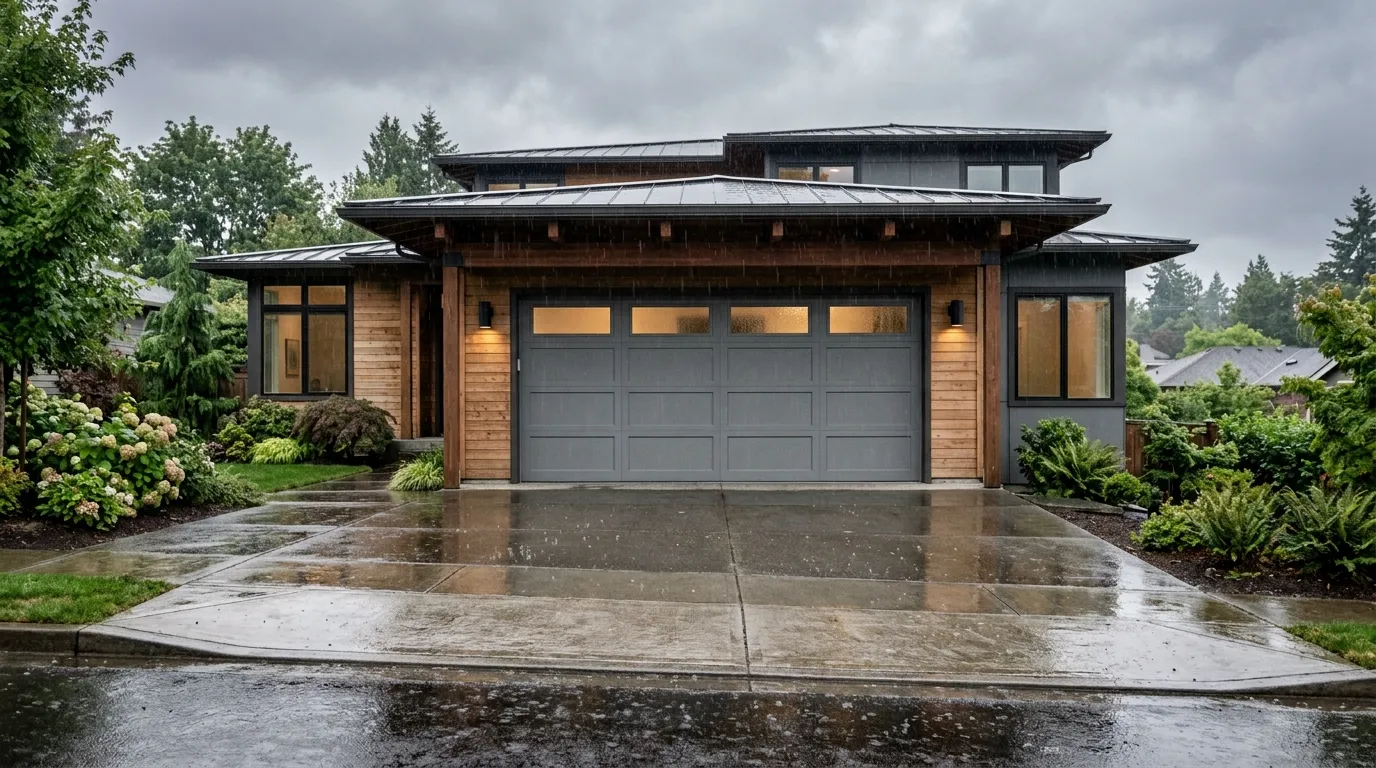
Most houses in this part of Tukwila and the surrounding areas like Bryn Mawr-Skyway and Riverton-Boulevard Park went up between 1962 and 2005, with the bulk of that stock dating to the 1980s and 90s. That matters for one reason: garage door insulation standards weren't part of most local building requirements when these houses were framed. A door installed in 1983 was built to keep weather out, not to hold heat in. It's a single layer of steel or aluminum over an open frame, sometimes with a thin foam liner added later, sometimes with nothing at all.
Tukwila sits in a cold-moderate climate band - not the harshest winters in the state, but enough freeze-thaw cycling and damp cold to matter for a door that was never designed with an R-value in mind. Uninsulated doors flex more in temperature swings, and the steel skins on older panels tend to show it first at the bottom corners and along the seams where water sits. If your garage backs onto a bedroom or laundry room, that gap in the door is doing more to your heating bill than most people think.

The area
When to Get Help
If your door dates to the same era as the house - 1980s or 90s construction is the most common vintage across this service area - and you've never touched it beyond the opener, it's worth a look before it fails on its own schedule. Signs worth acting on: daylight visible around the bottom seal even when the door is shut, condensation forming on the inside skin in cold months, or a door that feels noticeably colder to the touch than the rest of the garage wall.
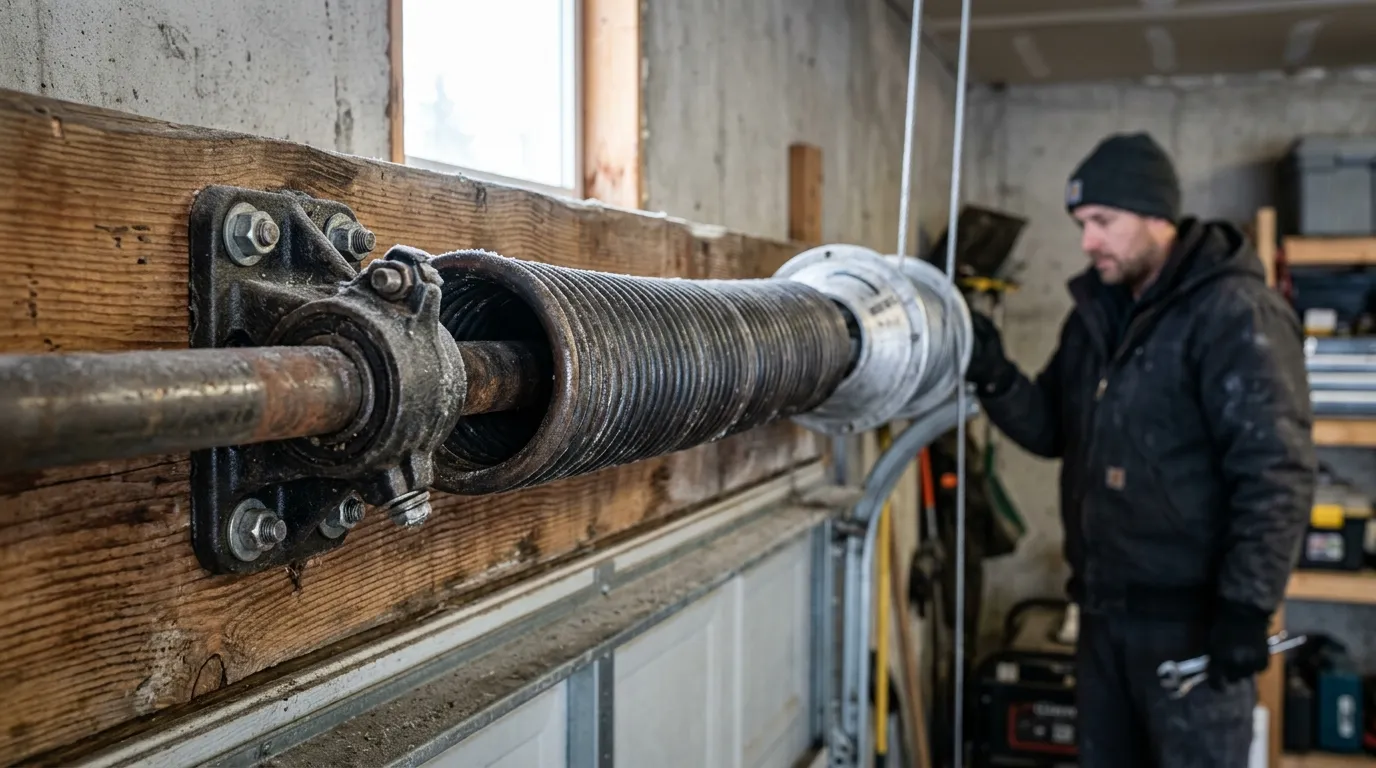
A door that's original to a house built in the early 80s has had four decades of temperature cycling on hardware that was never rated for insulation retrofits. Springs and rollers wear on their own timeline regardless of insulation, but on these older single-layer doors, the panel itself is usually the weak point, not the moving parts. If the steel skin is separating from the frame or the bottom panel has started to bow, that's a structural problem, not a comfort one, and it won't wait.
What we find
What Is Going On
An uninsulated door built before energy codes caught up is basically a sheet of metal on hinges. It was never meant to be a thermal barrier - that job belonged to the walls, not the largest moving surface on the house. Over 20 or 30 years, that steel skin has expanded and contracted through every winter Tukwila has had, and on doors from the 1962-2005 building window, the fasteners and seams that hold the panel flat start to give a little more each year.
What you're usually looking at isn't a broken door - it's a door doing exactly what it was built to do, just built to a standard nobody uses anymore. The frame is often still square, the track still true, but the panel itself has no insulating layer to stop heat loss or muffle the temperature swing between garage and house. That's a different problem than a snapped cable or a dead opener, and it gets solved differently.
How we work
The Cost of This Job
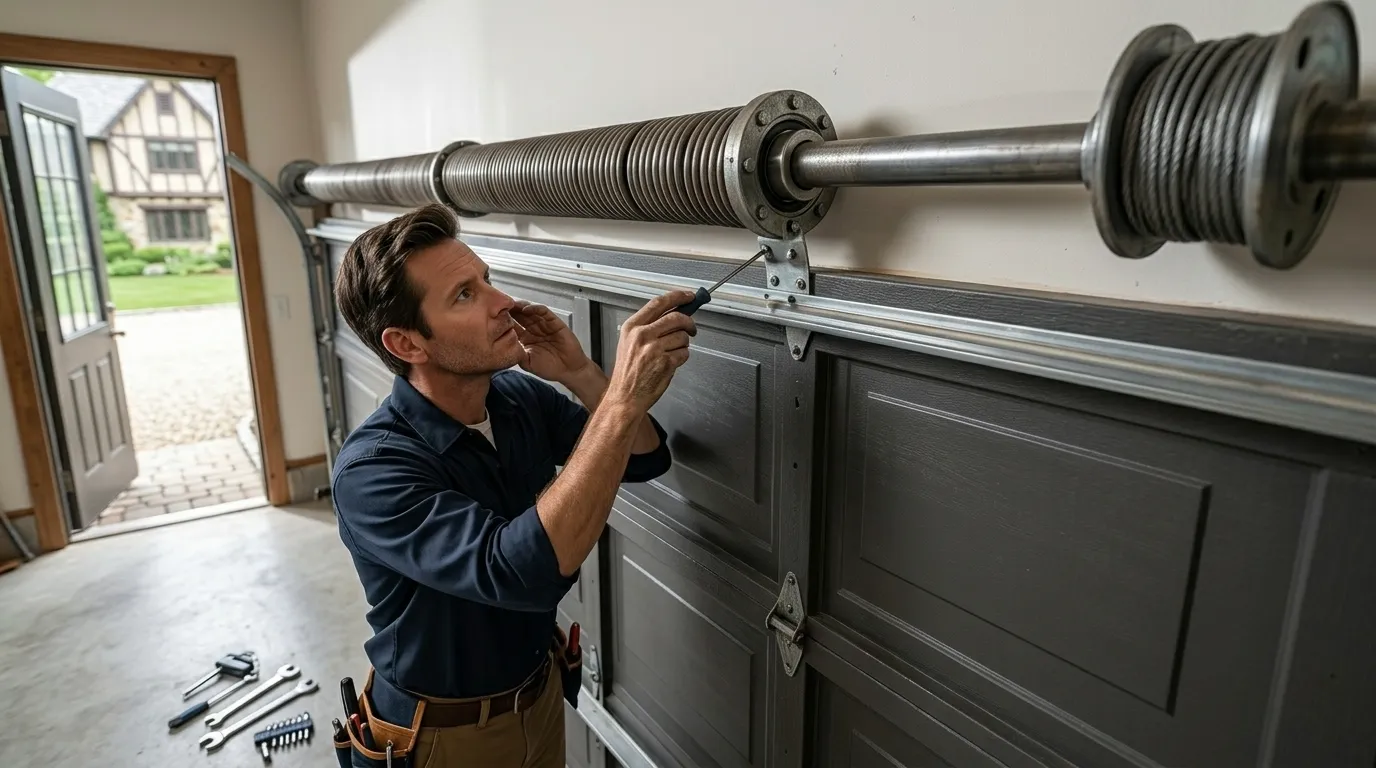
I can't quote a number here without a fact to back it - every service area has its own material and labor costs, and I'm not going to make one up. What I can tell you is how to think about the decision: a door with a sound frame and track but no insulation is a different job than a door with a bowed or separated panel. One is a retrofit question. The other is a replacement question, because you can't glue an R-value onto steel that's already failing structurally.
Given that most of the housing across this service area - 71,219 owner-occupied houses among 121,185 households - dates to the same 1962-2005 window, this is a common call, not a rare one. If your door is original to a house from that era, it's worth having someone look at the panel condition before you decide whether insulating is even the right fix, or whether the door's age has already made that decision for you.
Questions
Common questions
Why doesn't my garage door have any insulation at all?
If your house was built anywhere in the 1962-2005 range that covers most of this area, insulation wasn't a standard requirement for garage doors at the time. Builders used single-layer steel or aluminum panels because the code didn't call for anything more. It's normal for the era, not a sign of a bad original install.
Is it worth insulating an old door instead of replacing it?
Depends on the panel condition. If the frame and track are sound and the steel skin isn't bowed or separated, an insulated retrofit can work. If the panel has already started failing at the seams - common on doors from the 80s and 90s - insulating won't fix the underlying problem and replacement is the better call.
Does Tukwila's climate make this worse?
Tukwila sits in a cold-moderate band, which means enough freeze-thaw cycling to stress an uninsulated steel panel over the decades, though it's not the harshest climate in the state. It's the age of the door combined with the climate, not the climate alone, that drives most of the wear I see.
How do I know if my door is original to the house?
If you haven't replaced it and the house falls in the common 1980s-90s construction window for this area, there's a good chance it's original. Look for a manufacture date stamped on the inside of a bottom panel, or check for a thin foam liner - its absence usually means factory-original and uninsulated.
Ready when you are
Need a garage door sorted in Tukwila?
Tukwila Garage Door Pros repairs and installs garage doors, springs and openers in Tukwila, WA and the surrounding area.