
Guide
Is Your Door Old Enough to Need a Real Decision, Not Just a Repair
Most Tukwila-area houses date to 1962-2005, median 1983. Here's how that age and our cold-moderate climate decide whether your door is worth repairing.
Local detail
What Local Conditions Do
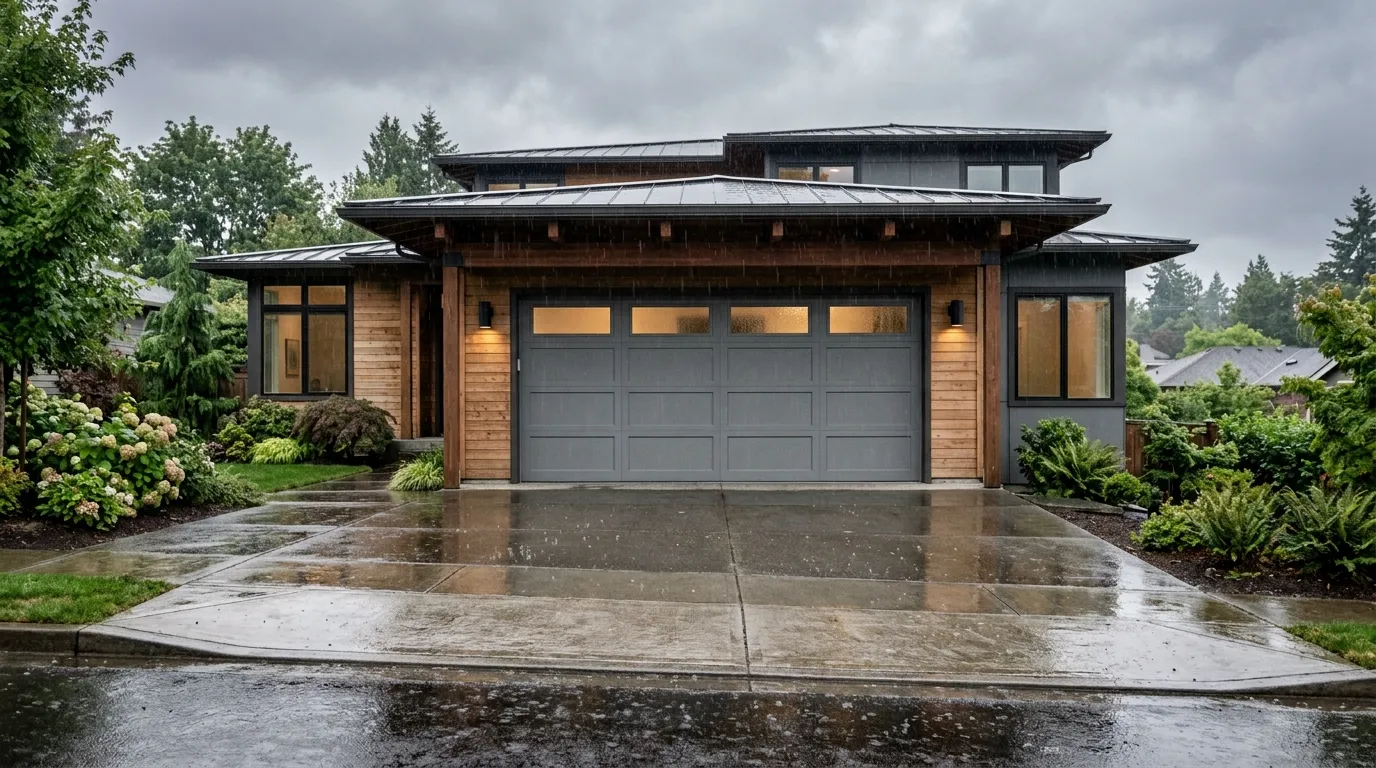
Most houses in the Tukwila service area went up between 1962 and 2005, with the median landing around 1983. That matters more than people think. A door installed when the house was built has had thirty to sixty years of the same cold-moderate climate working on it - not brutal heat, not deep freeze, but steady damp and temperature swings that pull moisture into wood panels and slowly stiffen or corrode steel hardware.
Across the 35 named areas we work in, from Bryn Mawr-Skyway two miles out to places like Fairwood and Covington further east, the bulk of the stock is 1980s and 90s construction, which puts a huge share of doors right in the window where springs are near the end of their rated cycles and original hardware is starting to fail quietly, not dramatically. You won't get a hard freeze cracking a torsion spring overnight here. What you get instead is slow fatigue: a spring that's lost 20 percent of its tension over two decades, a track that's shifted a quarter inch from years of humidity moving the framing around it.
That's the local condition. It doesn't announce itself, it just makes the door heavier to lift, noisier on the way up, and more likely to bind on one side before it fails outright.

The area
When to Get Help
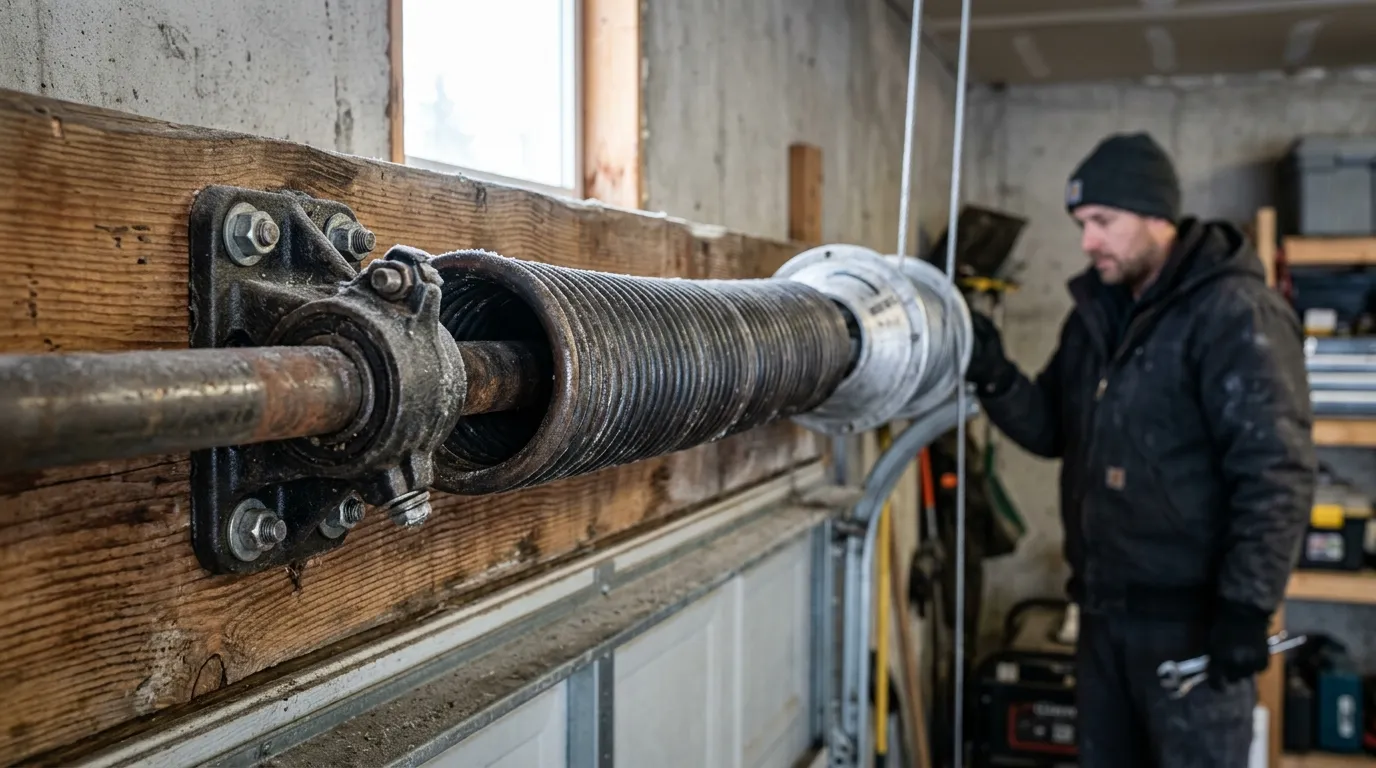
Call before the door won't move at all. On a house built in the median 1983 range, a torsion spring is usually the first thing to go, and the warning signs show up weeks or months ahead: the door feels heavier by hand, the opener strains and reverses partway up, or you hear a distinct bang from the spring area followed by the door sitting stuck. If your house falls into that 1962-2005 build window that covers most of this service area, don't wait for the second spring on a two-spring setup to go, because running on one is how cables snap and how people get hurt trying to force it. Get help too if a panel has started to bow or rot at the bottom - common on original wood-composite doors from that era once moisture works into the seams over enough winters.
If the door is only sticking on a track or the opener needs a sensor cleaned, that's a smaller call, and we'll tell you that on the phone rather than send a truck for nothing. Not every noise means a big job. But on a door old enough to match the housing stock out here, a stuck spring or a grinding roller is worth a same-week look, not a shrug.
What we find
What Is Going On
On a door built anywhere in the 1962-2005 range that covers most of this area, what's usually failing is one of three things: the torsion or extension springs losing tension after years of cycling, steel rollers wearing their bearings out and starting to bind in the track, or the bottom weatherseal and panel edges taking on moisture from repeated cold-moderate winters and softening. None of these are dramatic climate events - no hailstorm, no deep freeze snapping a cable overnight. It's cumulative wear that matches the age of the house itself. A door original to a home built in the early 1980s median for this area has usually gone through one spring replacement already, or is due for one.
A door from a 1990s build might still be on its first set of springs but showing rust at the hinges from decades of condensation cycling in an unheated garage. What's going on almost always ties back to how long the hardware has been doing the same job in the same conditions, not to any single event. That's also why a door that looks fine from the driveway can be a week from a spring failure - the fatigue is inside the coil, not on the surface.
How we work
The Cost of This Job
We're not going to quote a number here without seeing the door - panel count, spring type, and opener age all move the price, and we don't have pricing data to state on this page. What we can tell you is how to think about the repair-versus-replace call. If the frame is square, the track is straight, and it's just a spring or a roller set, that's a repair, and on a door from the common 1962-2005 stock in this area that's almost always the right call - the door itself still has years left.
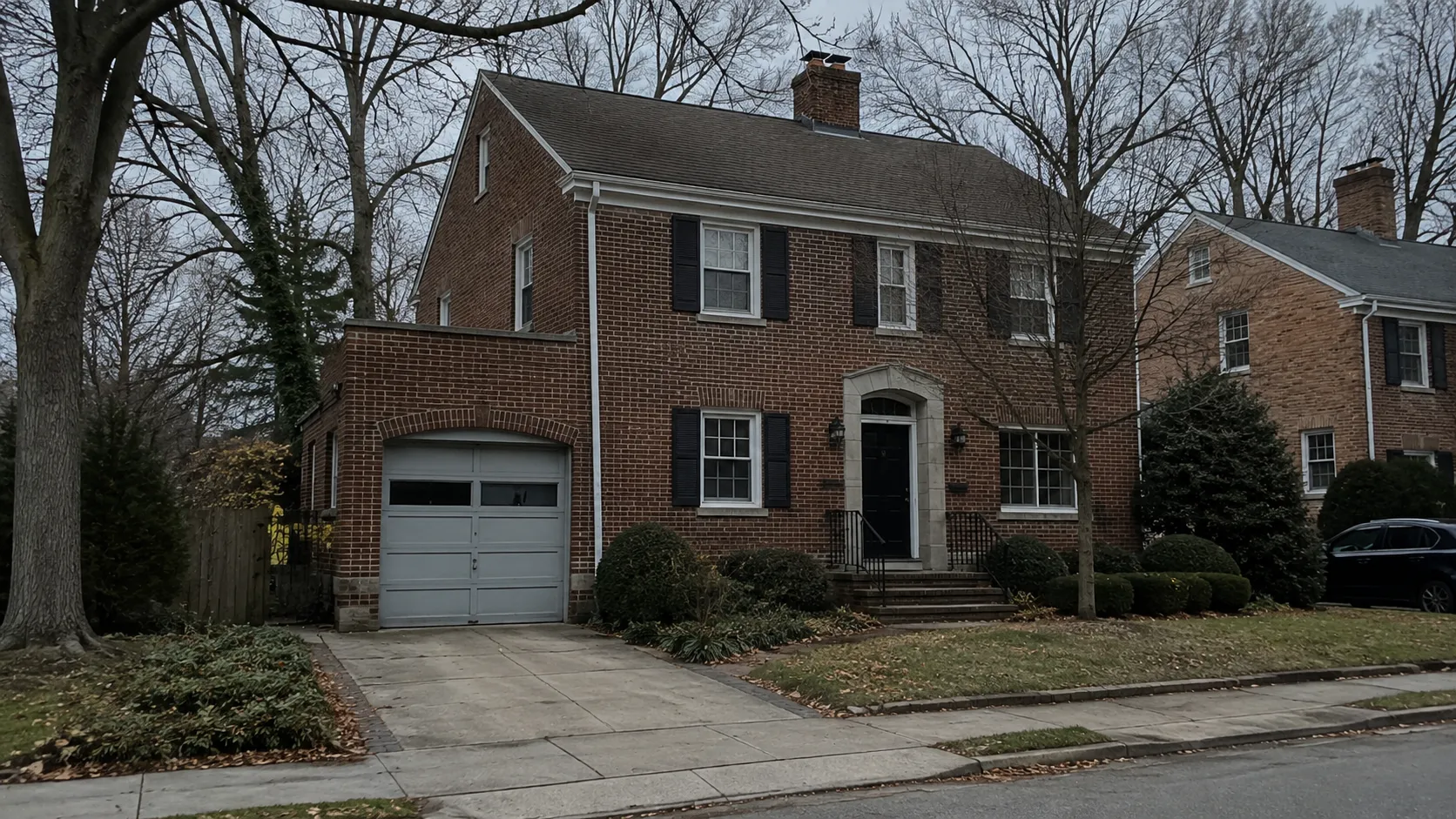
Replacement makes more sense when the panels are rotted through, the track is bent from a impact, or you're stacking a third repair onto a door that's already had two. With 71,219 owner-occupied houses across the service area, we see a lot of doors in that in-between spot, and the honest answer is often: fix the spring now, budget for a new door in the next few years, don't do both at once unless something's actually broken. We'd rather tell you that than sell you a door you don't need yet.
Questions
Common questions
How do I know if my garage door is too old to repair?
If the panels are cracked or rotted through, the track is bent, or you've replaced springs twice already, replacement usually makes more sense than another repair. On the 1962-2005 stock common in this area, most doors with sound panels and frames are still worth fixing - it's the hardware wearing out, not the door structure.
Why does my door feel heavier than it used to?
Almost always a torsion or extension spring losing tension over years of use. It happens gradually in our cold-moderate climate rather than all at once, so a door that's noticeably heavier than a year ago is telling you the spring is close to the end, not that something's wrong with the opener.
Is it normal for an older door to make more noise over time?
Yes, and it's usually rollers wearing out or a track shifting slightly as the house settles, which is common on 1980s and 90s builds across this area. Noise alone isn't an emergency, but paired with a heavier lift or visible rust, it's worth a look before something binds or breaks.
Ready when you are
Need a garage door sorted in Tukwila?
Tukwila Garage Door Pros repairs and installs garage doors, springs and openers in Tukwila, WA and the surrounding area.