
Guide
Why Tukwila Garage Doors Let in Draughts
Tukwila's 1980s-90s housing stock and cold, wet climate wear down garage door weather seals fast. Learn what causes draughts and when a repair makes sense.
Local detail
What Local Conditions Do
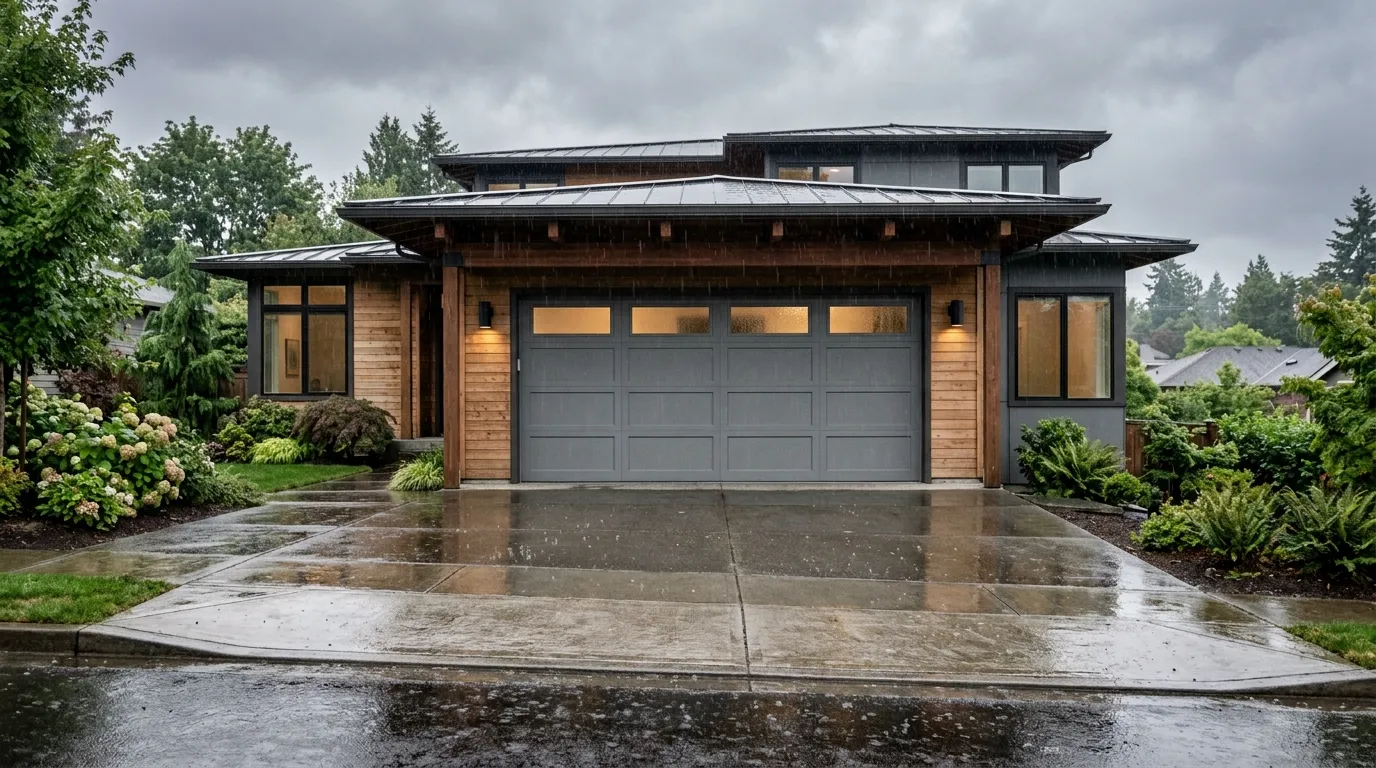
Tukwila sits in a cold, moderate climate band, and that matters more for a garage door than most people think. The seal at the bottom of the door and the weatherstrip running up each side aren't decorative - they're the only thing keeping wind-driven rain and cold air out of the space where your water heater or laundry room often lives. Every freeze-thaw swing through the winter makes rubber and vinyl seals harden, shrink, and eventually pull away from the frame.
Most houses in this area were built between 1962 and 2005, with the heaviest concentration going up through the 1980s and 90s across the 35 named neighborhoods in this service area. That means a lot of original bottom seals and side weatherstrip are now twenty, thirty, even forty years past when they were installed, and they were never meant to last that long. Across the 71,219 owner-occupied houses counted in this area, that's a huge number of doors quietly leaking air and losing the fight against draughts one winter at a time.
You notice it as a cold floor near the garage wall, a wet line under the door after a storm, or a spike in the heating bill you can't otherwise explain. It's not damage in the dramatic sense - it's slow, and it's everywhere.

The area
When to Get Help
Call when you can see daylight along the bottom edge of the closed door, when the vinyl seal has cracked into segments instead of running as one continuous strip, or when the side weatherstrip has pulled loose from its track and flaps in the wind. If you're feeling a draught at floor level even with the door fully down, the seal has already failed - it's not a maintenance question anymore, it's a repair one. Houses built in the earlier part of the 1962-2005 range, especially those still running original hardware, tend to show this first at the corners, where the seal takes the most flexing every time the door cycles.
Don't wait for the seal to fail completely before you deal with it. A cracked or gapped seal lets in enough moisture over a Tukwila winter to start affecting the bottom panel itself, and once the panel absorbs water and swells, you're no longer looking at a seal job - you're looking at a panel replacement. That's the honest line here: catching it early is a small job, catching it late is a much bigger one, and there's no way to un-swell a panel once it's soaked through a season or two.
What we find
What Is Going On
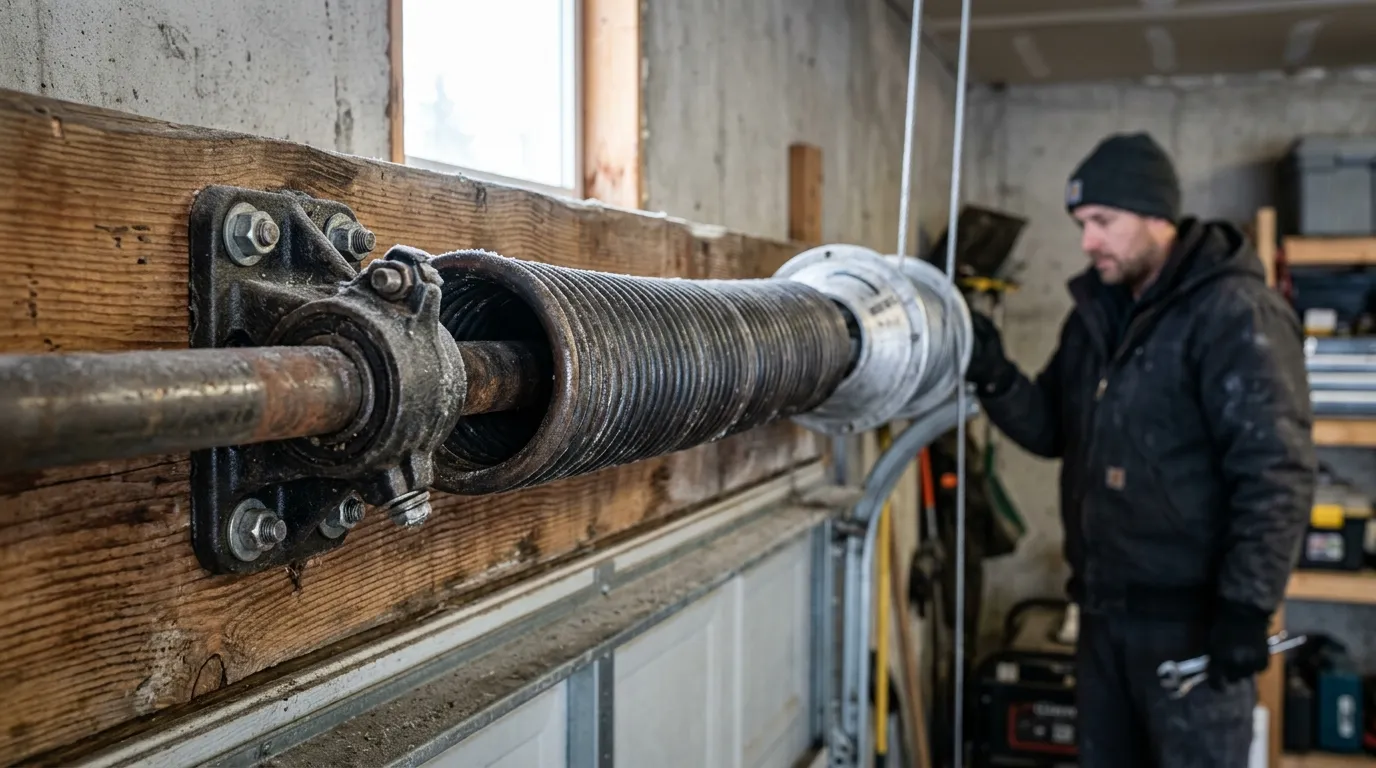
The mechanism is simple. Vinyl and rubber compress every time the door closes, and over thousands of cycles that material takes a permanent set - it stops springing back to seal the gap. Add cold-weather stiffening on top of that and a seal that was already thin loses contact with the slab entirely. On doors from the 1980s and 90s stock common across this area, the original track hardware and seal retainer channels were builder-grade, not the heavier aftermarket kind, so the retainer itself often warps a little over time and won't hold a new seal snug even after you replace it.
That's the part people miss: sometimes the seal isn't the whole problem, the channel holding it is bent or corroded enough that no new strip will sit flush. From Bryn Mawr-Skyway to Southcenter, we see the same pattern on the same era of aluminum track and steel jamb - a straightforward seal swap on a newer door, but a channel repair or replacement first on anything from that original builder-grade run. We check the channel before we quote a seal job, because putting a new seal into a bent channel just buys you another call in a year.
How we work
The Cost of This Job
We don't have a set number to give you here, because the cost depends on whether it's a straight seal swap or a channel repair first, and on the door's width and the type of track it runs on. A single seal replacement on a door with a sound channel is a short, contained job. Add a warped retainer channel, a door that's absorbed water and needs a bottom panel, or hardware old enough that matching parts have to be sourced rather than pulled off a shelf, and the job grows.
That last point is worth being upfront about: some of the older builder-grade channel and seal combinations from the 1962-2005 building era aren't stocked anywhere locally, and we sometimes have to special-order a matching profile, which adds time to the job rather than cost. We'll always look at the actual channel and seal before quoting anything, rather than guessing off a phone description, since the difference between a fifteen-minute fix and a half-day repair is usually something you can't see from inside the garage.
Questions
Common questions
Why does cold air come in around my garage door even when it's fully closed?
The bottom seal and side weatherstrip harden and shrink with age, and cold-weather cycles speed that up. Once the material takes a permanent set, it stops springing back to fill the gap against the slab or jamb, and that gap is exactly where the draught comes from. It's one of the most common calls we get on older doors in this area.
My house was built in the 80s - is the door original?
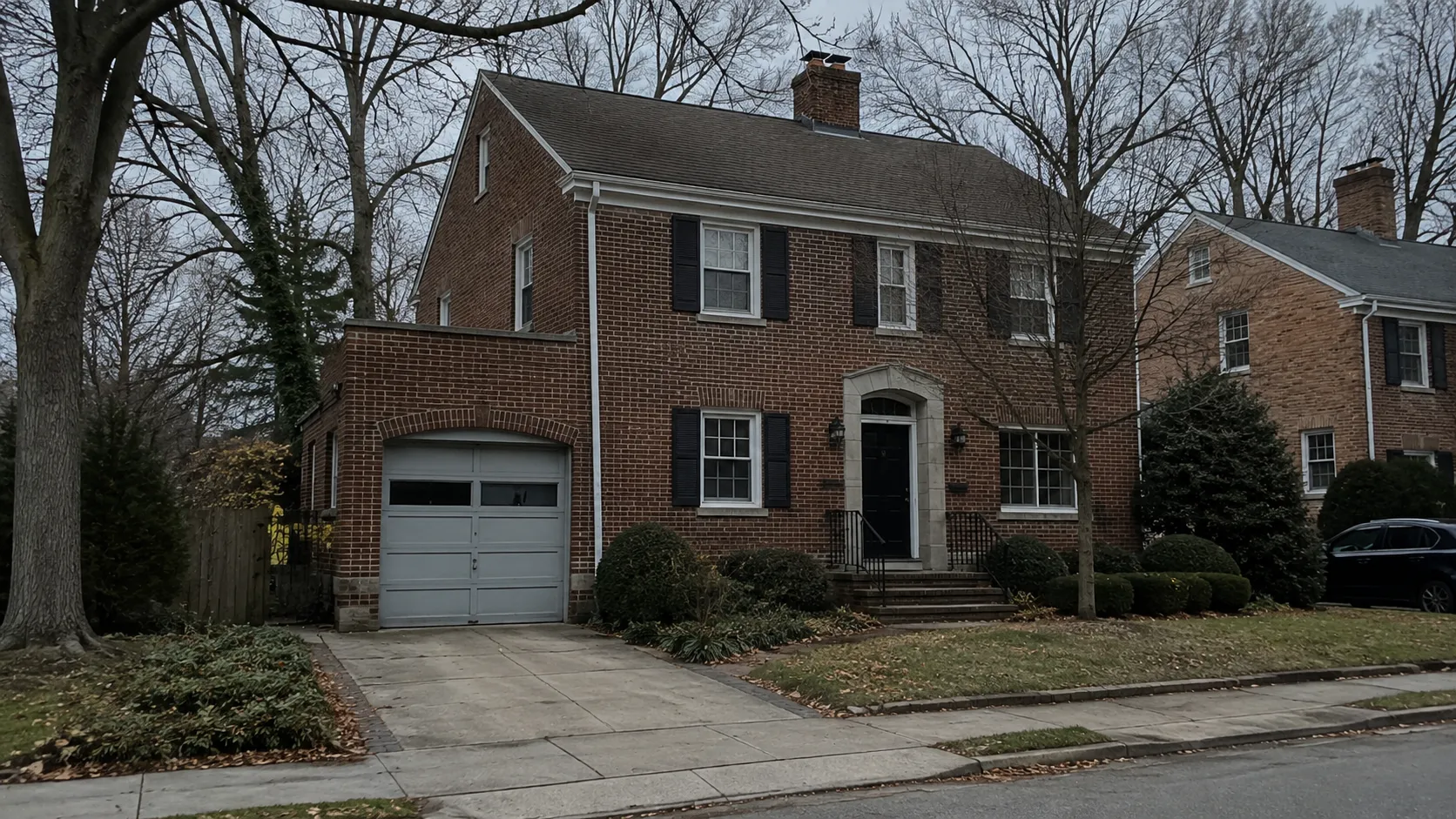
A lot of houses in this area went up through the 1980s and 90s, and it's common to find the original door, track, and seal channel still in place. If nobody's replaced the weatherstrip, it's likely well past its usable life, and the retainer channel holding it may have warped enough to need attention too.
Can I just replace the seal myself?
You can on a straightforward job with a sound channel. The catch is the channel itself - on older builder-grade doors it's sometimes bent or corroded enough that a new seal won't sit flush no matter how well it's installed. Worth checking that before you buy a strip that won't solve the draught.
How do I know if it's a seal problem or a bigger door problem?
If the bottom panel feels soft, swollen, or discolored near the floor, water's already gotten past the seal and into the panel material. A seal replacement won't fix that - at that point you're looking at panel repair or replacement instead.
Ready when you are
Need a garage door sorted in Tukwila?
Tukwila Garage Door Pros repairs and installs garage doors, springs and openers in Tukwila, WA and the surrounding area.