What Local Conditions Do
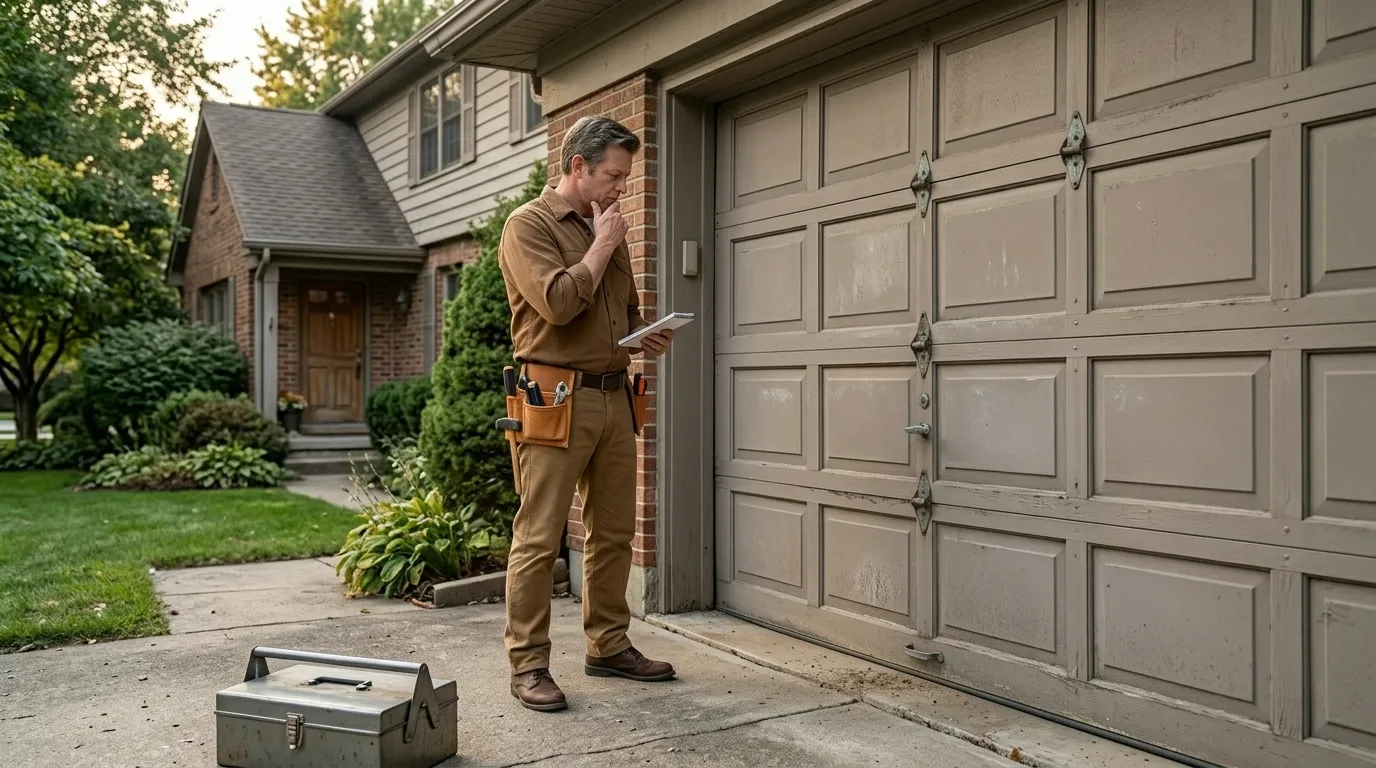
Most houses in Tukwila and the nearby named areas were built between 1962 and 2005, with the median landing around 1983. That's the era of the standard chain-drive opener - a motor, a chain, and a light bulb, with nothing built in to keep the door moving once the power drops. Across the 35 named areas that make up this side of the service area, the bulk of the stock is 1980s and 90s construction, which means a lot of garages are still running the same basic opener logic from that period, even if the unit itself has been swapped once or twice since it was built.
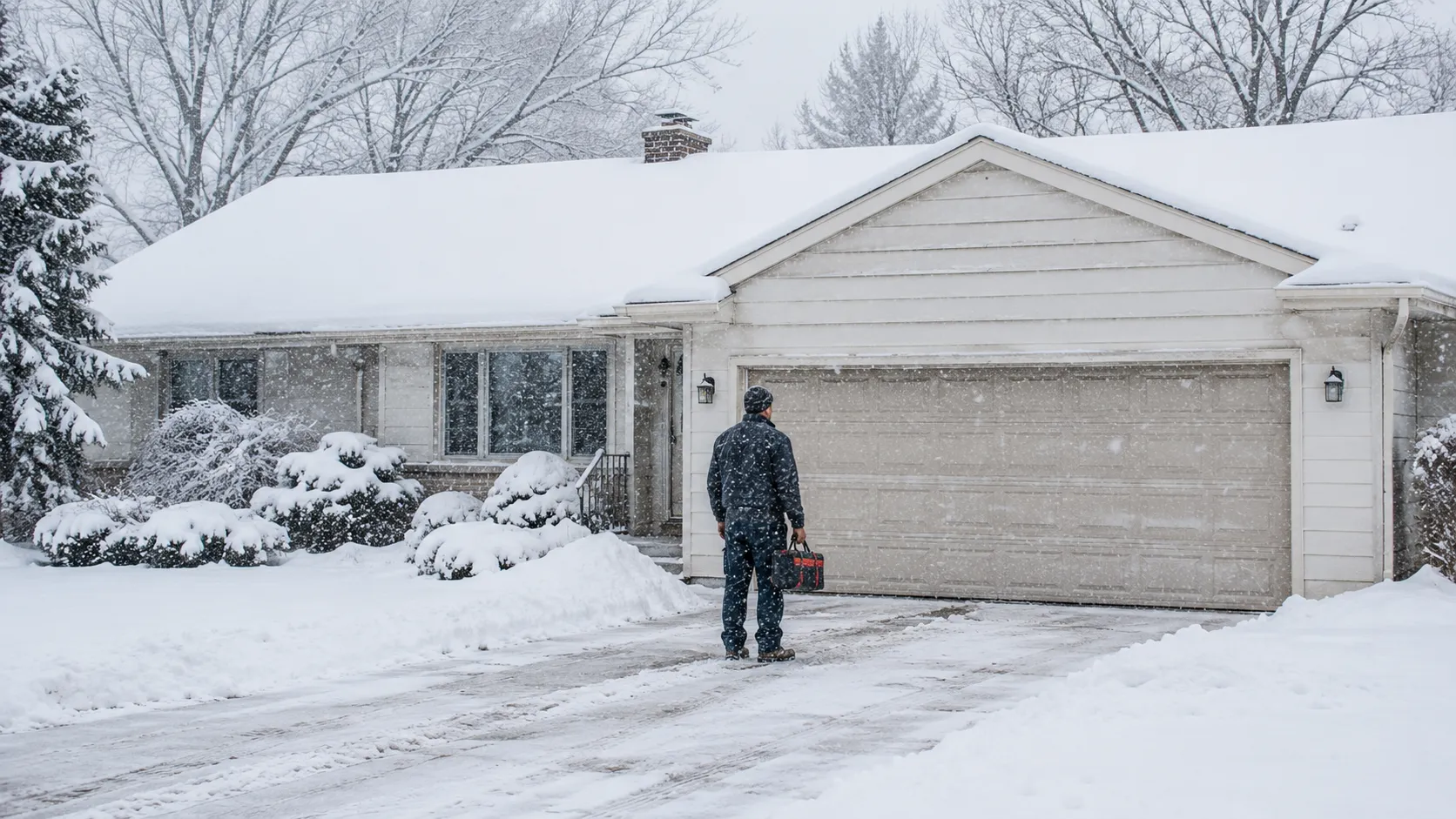
Tukwila sits in a cold moderate climate band. That doesn't mean brutal winters, but it does mean stretches of near-freezing mornings that stiffen the grease in an older chain-drive rail and make the motor pull harder to get a heavy door moving than it would on a mild day. Put that together with a power grid that has outages like any grid does, and you get a specific local pattern: openers already working a little harder in the cold, installed in homes without any built-in way to open the door once the power actually goes out.
When to Get Help
If your door hesitates before it starts moving, or the opener light flickers before the motor catches, that's a motor working harder than it should - worth a look before it fails outright, especially in a house from that 1962-2005 window where the original opener logic and gearing haven't changed much. A door that opens fine but strains audibly on cold mornings is telling you the same thing in a different voice.
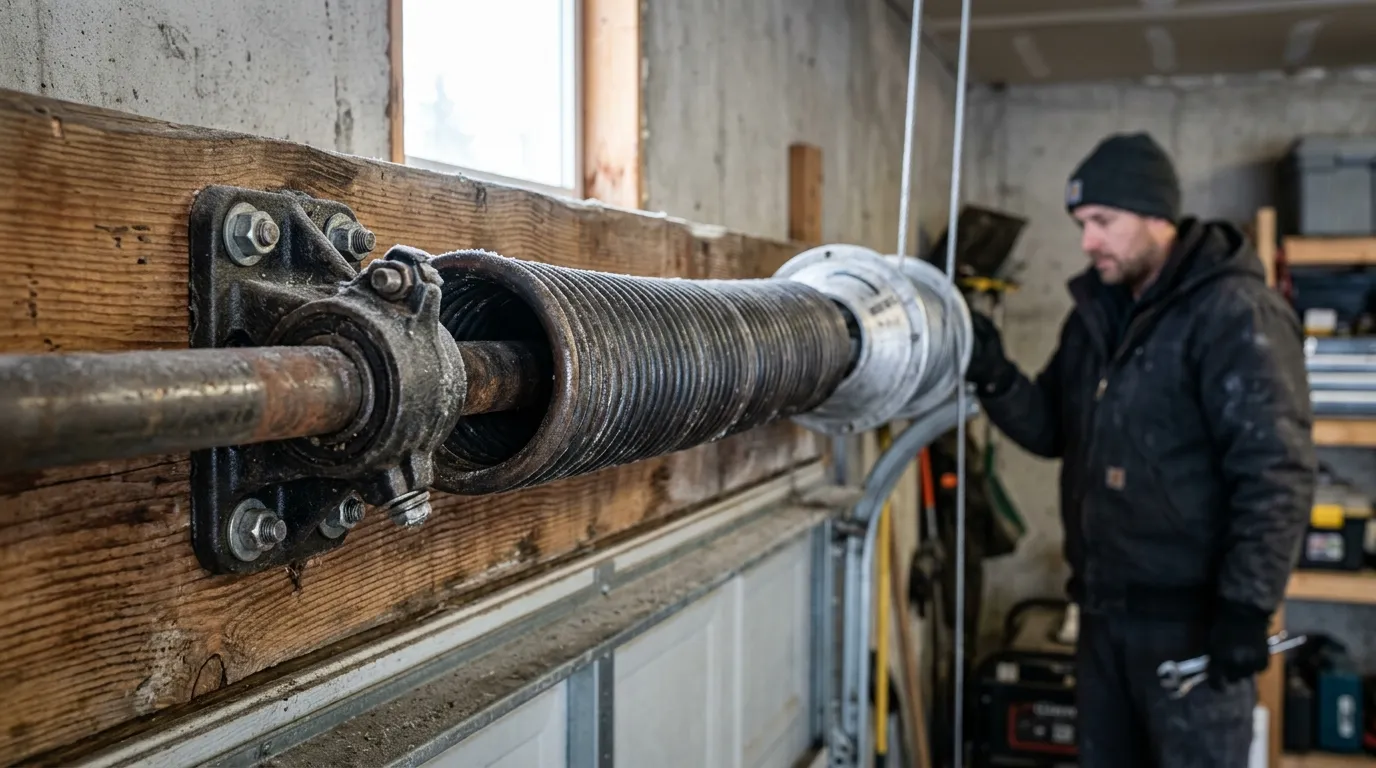
If a power cut leaves the door down and you can't find the manual release cord, or you're not sure the door is fully disengaged from the opener before you try to lift it by hand, stop and call. A garage door spring under tension, released with the opener still partly engaged, can move fast and hard. That's not a moment to improvise.
Get help sooner rather than later if the opener grinds, reverses on its own, or the remote only works standing right under it. Those point to a capacitor or logic board on its way out, not a fuse you can swap yourself. In a house from this era, the fix is usually a new opener rather than a part for the old one - most of those boards aren't stocked anymore, which is a real limit on what a repair can do.
What Is Going On
An opener built for a house from the 1962-2005 stretch is almost always a chain-drive unit: a motor turns a sprocket, the sprocket pulls a chain, the chain pulls the door along the track. It's simple and it lasts, but it has two weak points that show up here. First, the capacitor that gives the motor its starting punch wears down over years of cold starts, and this cold moderate climate means more cold starts than a warmer town would see. Second, chain drives need grease on the rail, and grease stiffens below a certain temperature - exactly the extra load that shows up as a straining motor on a cold morning.
A power cut doesn't damage the opener itself. What it does is strand the door: the motor can't move it, and neither can you, until you find the manual release cord - usually a red cord hanging near the motor unit - and pull the trolley off the rail. Once that's done the door moves on its springs and your own strength, same as a door with no opener at all. The opener doesn't come back online until the power does, and if the outage tripped anything in an aging logic board, sometimes it doesn't come back at all. That's a call, not a reset.
The Cost of This Job
I don't have a set price to hand you here, because what this job costs depends on what's actually failed - a capacitor swap is a different job than a full opener replacement, and a chain-drive unit from the 1980s often isn't worth repairing piece by piece once the board goes. What I can tell you is what moves the number: whether the opener is original to the house or already a replacement, whether you want a battery backup unit given the outage risk this climate carries, and whether the track and springs are original hardware from the same build era that needs attention at the same time.
Median household income across this service area runs $119,013, and in practice that's part of why more owners here choose to replace an aging chain-drive opener with a belt-drive, battery-backed unit rather than keep patching the original - the upgrade tends to pay for itself in fewer stranded-door calls during outages. That said, if your opener is newer and the fault is a single part, repair usually makes more sense than replacement. I'll tell you which situation you're in before I quote anything, not after.
Talk to a local pro
Garage door trouble in Tukwila?
Same-day service with honest, upfront quotes.