
Original cable fraying
In houses from the 1962-2005 build window, we also see original lift cables that have never been lubricated fraying at the drum, and weatherstrip at the bottom panel that's cracked from years of cold-season contraction.
Tukwila, WA
Tukwila's housing stock runs 1962-2005 with a median build year of 1983. Here's why that age and our cold climate band wear out springs and rollers early.
Local causes
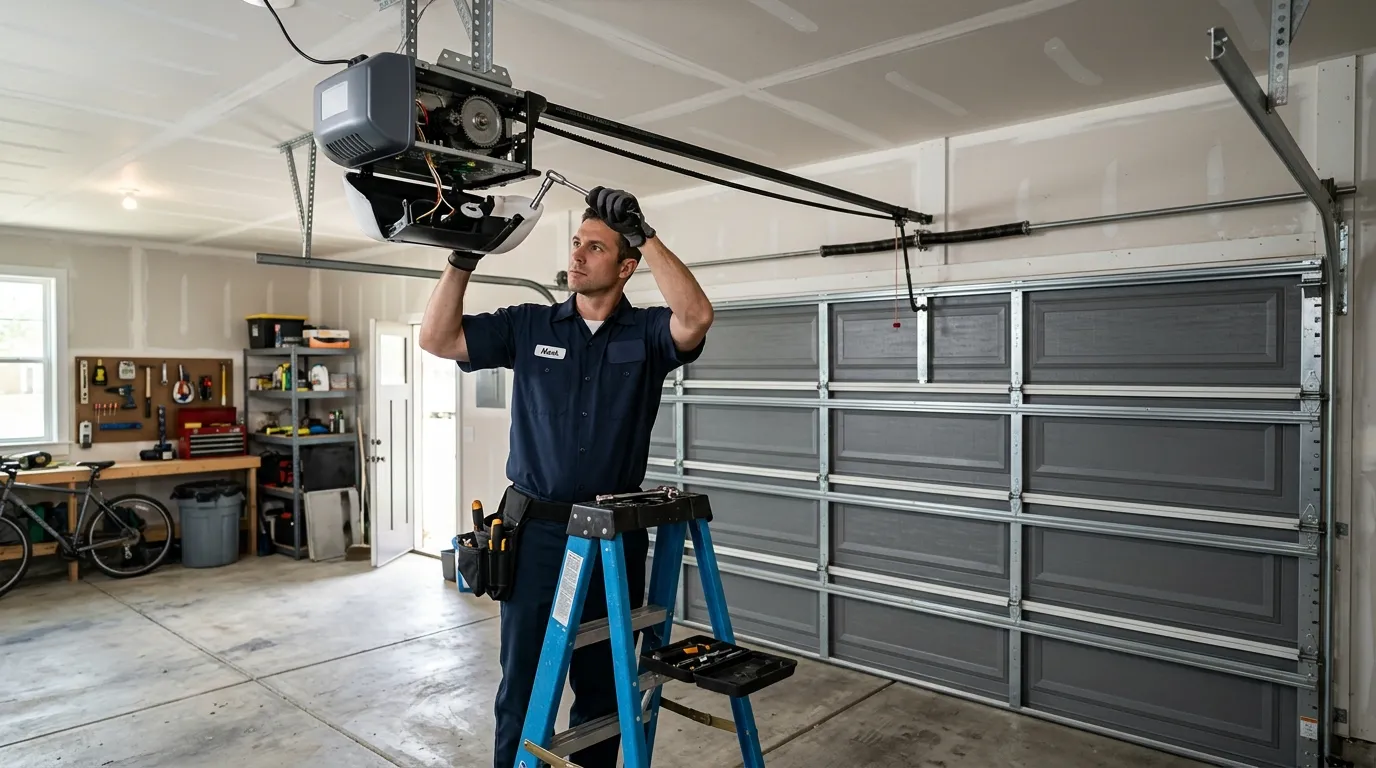
Most of the garage doors we service across this area sit on houses built between 1962 and 2005, with the median build year landing around 1983. That's a specific problem: a torsion spring or a set of rollers installed when a house went up in the early '80s is now well past its rated cycle count, whether or not anyone's touched it since.
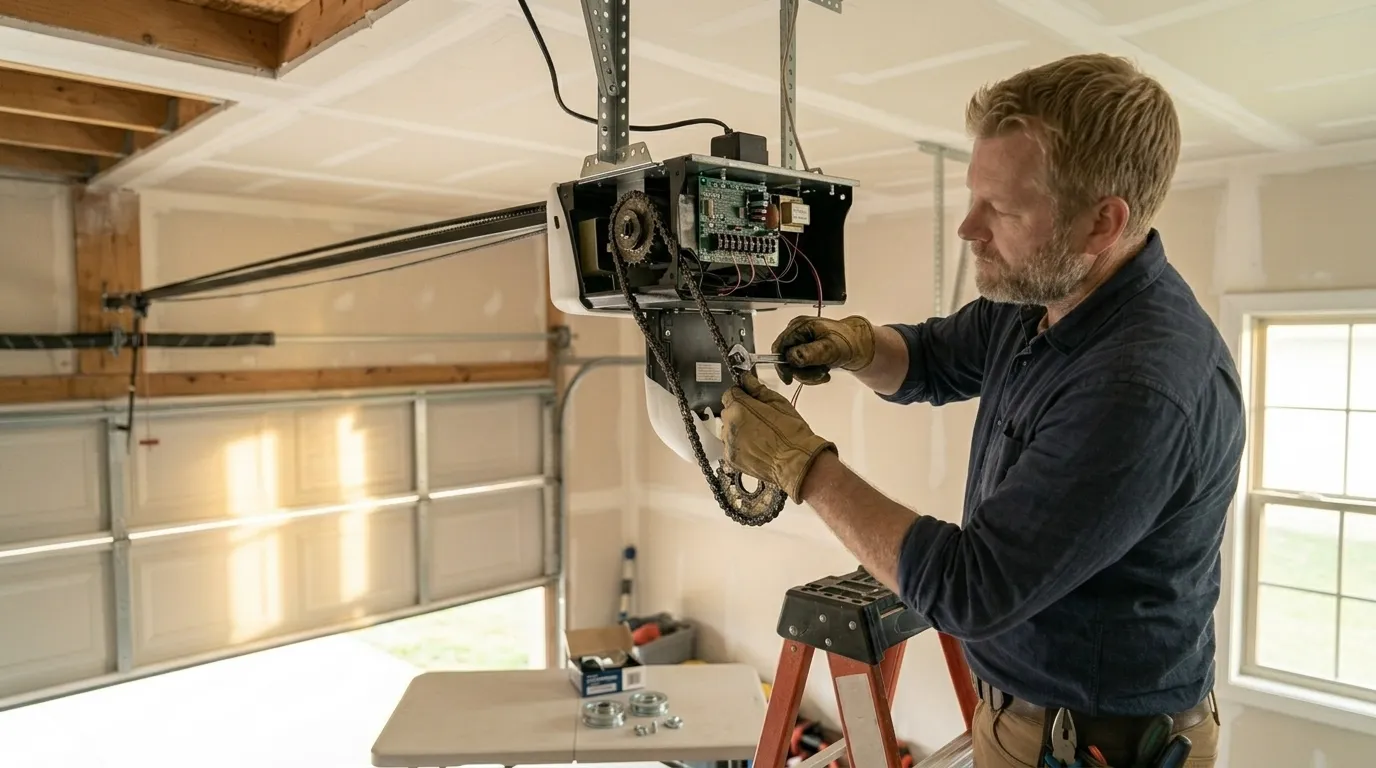
The climate band here is cold-moderate, not the mild coastal band some nearby regions get. That matters for maintenance because steel torsion springs lose tension faster with repeated cold-to-warm swings, and the grease in an original opener chain drive thickens up in cold mornings, which loads the motor and the drive gear every single open. A door that's never been serviced in a house from this era isn't a maybe-problem. It's a when-problem.
Across the roughly 71,219 owner-occupied houses in the wider service area, the pattern repeats: original hardware, original springs, decades of temperature cycling, and no maintenance history. That's the baseline we're working against, not a guess about any one house.
Warning signs
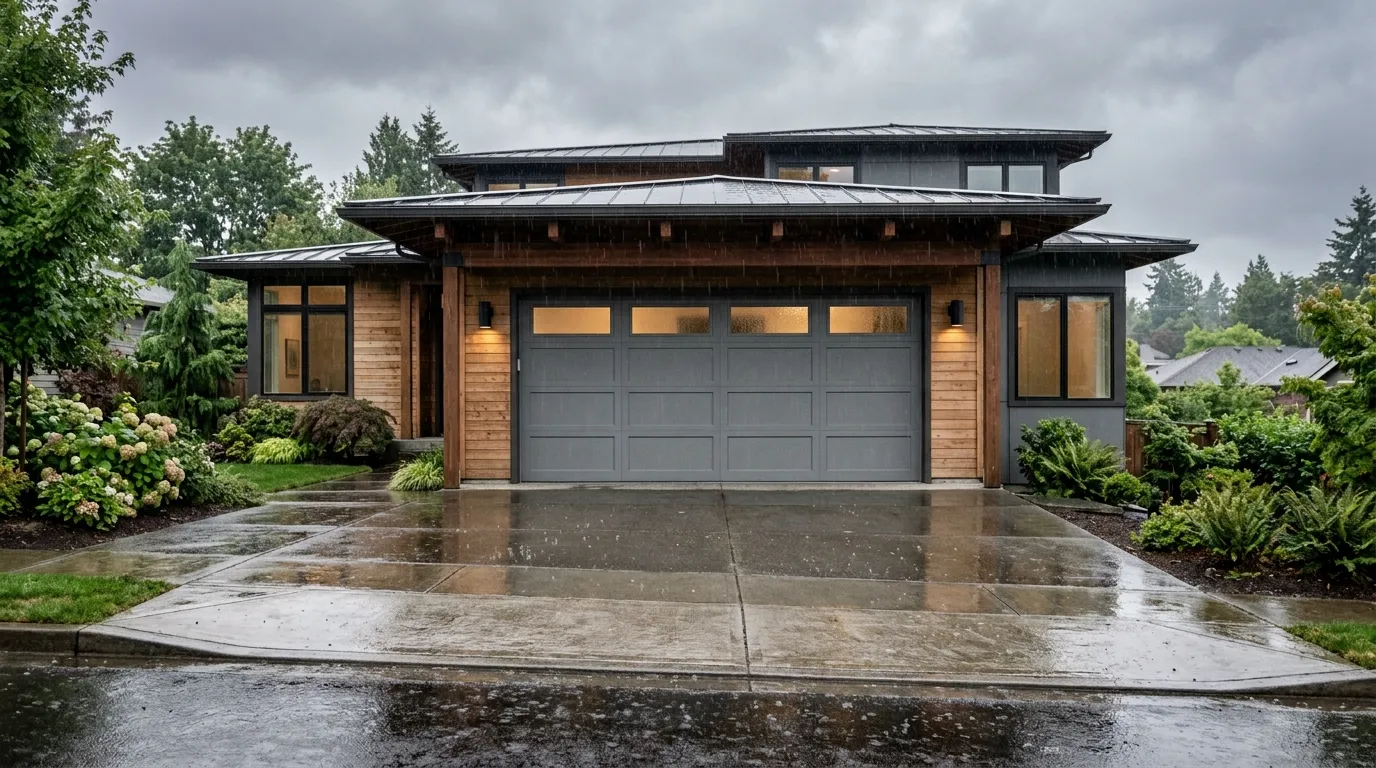
The failure doesn't usually announce itself as a broken door. It shows up as a slow start where the opener strains for the first foot of travel, a spring that looks fine but is clearly under less tension than the other side of the door, or a track that's drifted out of parallel enough that rollers grind instead of roll.
In houses from the 1962-2005 build window, we also see original lift cables that have never been lubricated fraying at the drum, and weatherstrip at the bottom panel that's cracked from years of cold-season contraction.
None of these are emergencies on the day you notice them. All of them get worse fast once the cold sets in for the season, because cold steel is less forgiving of an already-worn part.
Homeowners often call after hearing a new noise, not after the door stops working. That's the right time to call. The wrong time is after the spring snaps under load, which is a heavier repair and a bigger bill than a scheduled tune-up.
The repair
A maintenance visit on a door from this era means checking spring tension against the door's actual weight, not just eyeballing it, because factory tension specs from a 1980s install don't match today's heavier insulated panels if the door's ever been replaced without a spring recalculation.
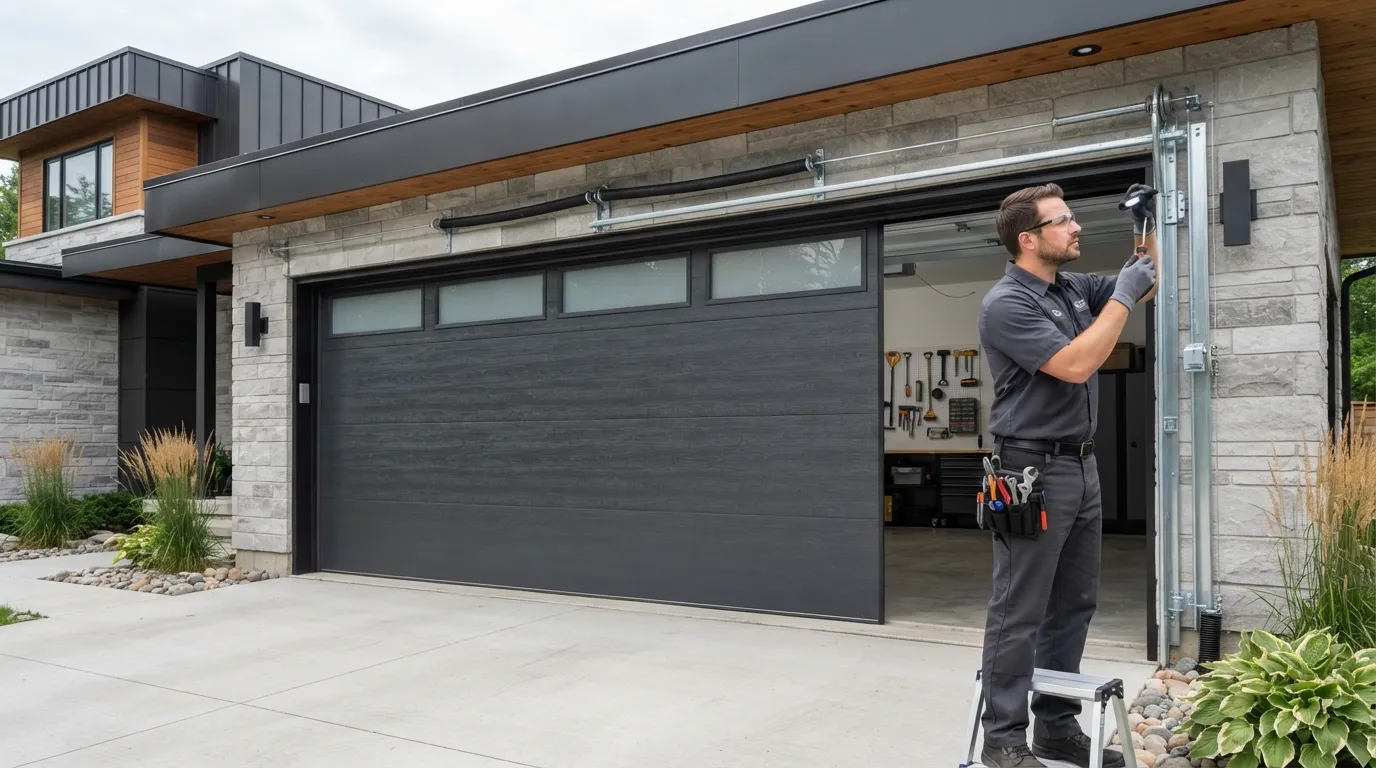
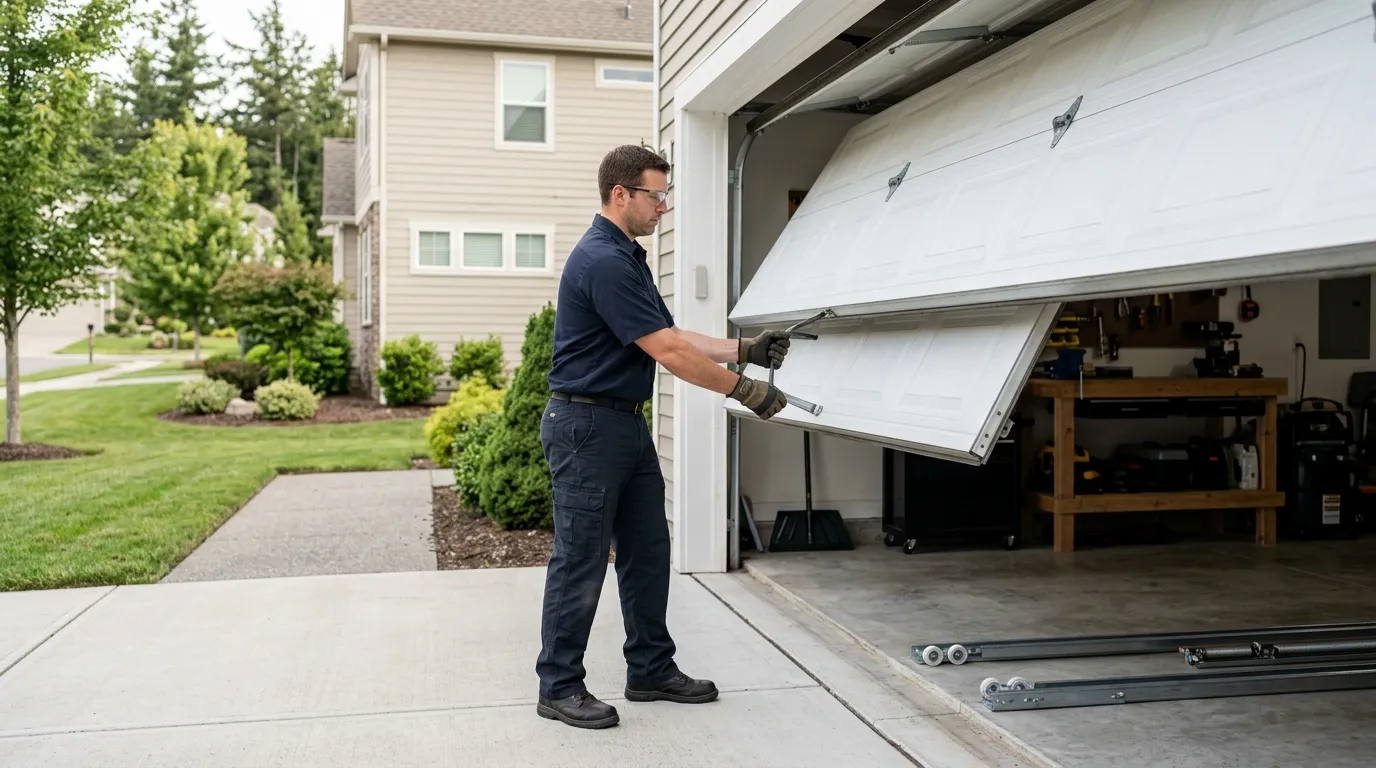
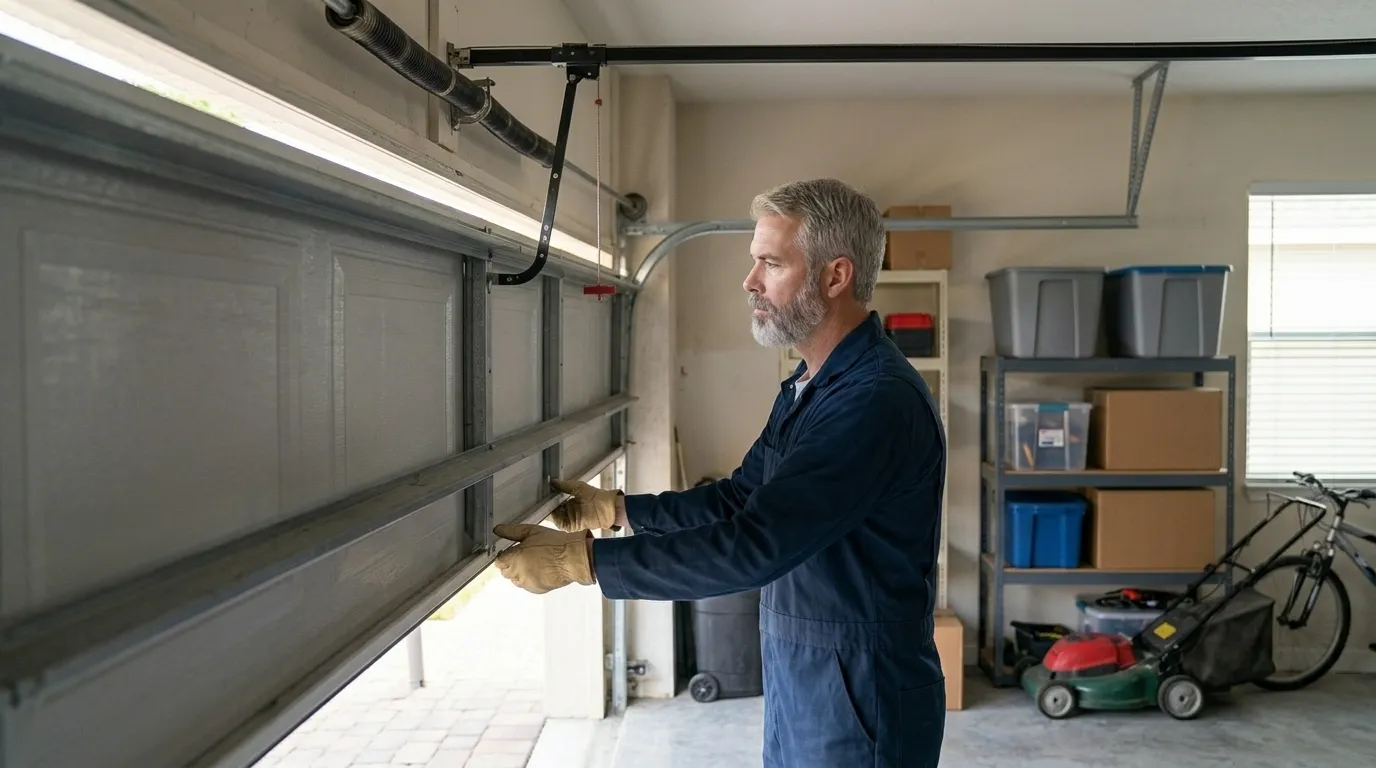
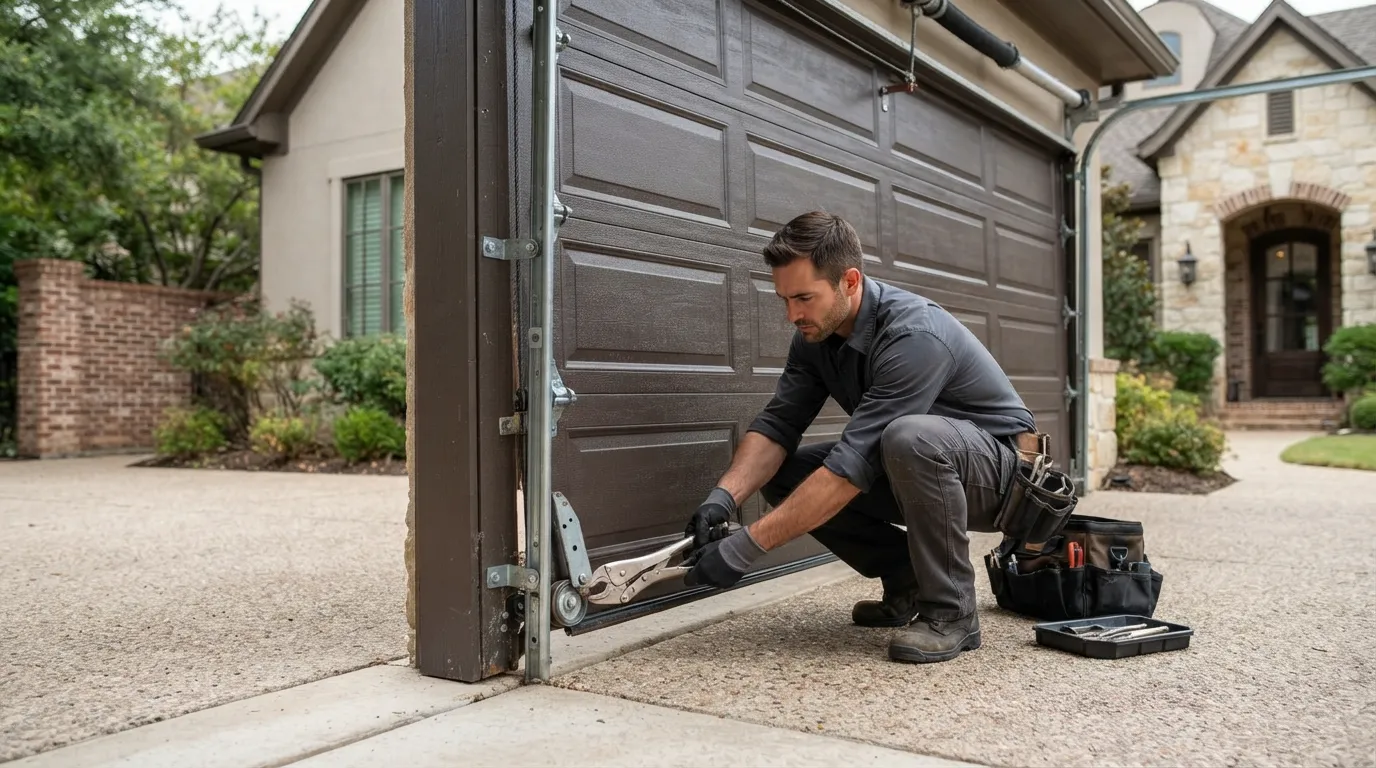
We check track alignment, roller wear, cable condition at the drum, and opener force settings, then lubricate the moving hardware with a lubricant rated for the cold-moderate swings this area gets, not a general household oil that thins out and runs off.
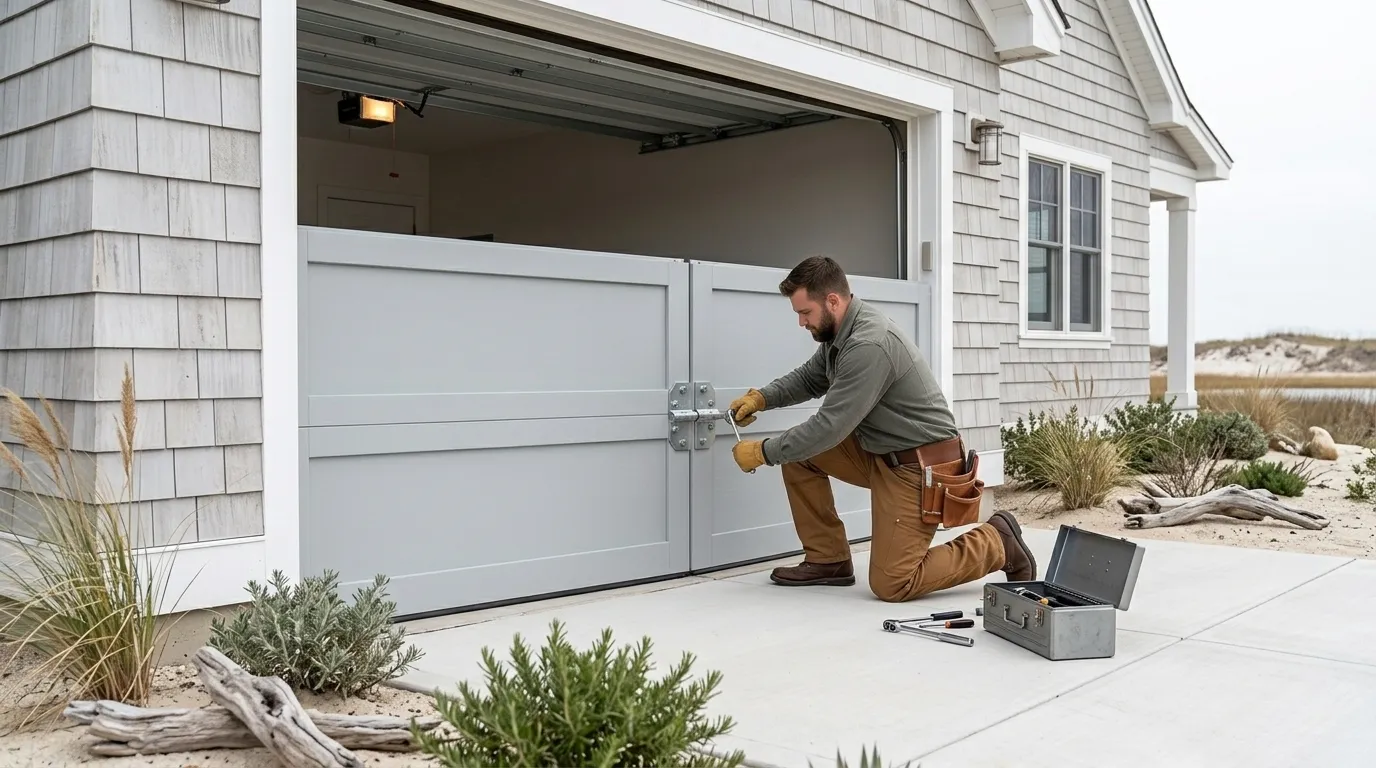
We'll also check the weatherseal at the bottom panel and the header, since that's the piece most exposed to seasonal cold contraction and the first thing that starts letting cold air and moisture into the garage.
Here's the honest limit: if a spring is already flagged as near end-of-life during the visit, we're not going to just lubricate around it and call it done. We'll tell you it needs replacing before it needs an emergency call, and that's a separate job from a standard maintenance visit.

Timing
A standard maintenance visit is a single-truck, same-day job start to finish once we're on site. It's not a project that requires ordering parts or scheduling a return trip unless the inspection turns up a part that needs replacing, like a spring or cable that's past safe service life. In that case we'll walk you through what we found and what it takes to fix it, rather than starting work you didn't agree to.
We don't have a stocked answer for every possible parts delay - if something unusual turns up on an older opener or a discontinued track style, that can push timing out. But for the routine tension, track, roller, and seal check that most houses in this service area need, it's a straightforward visit, not a multi-day ordeal.
Questions
With the cold-moderate temperature swings this area gets, we recommend a maintenance check at least once a year, especially for doors on houses built in the 1962-2005 range where original hardware is common. Annual service catches spring wear and cable fraying before they turn into an emergency call.
Sometimes. If the noise is from dry hardware or a slightly misaligned track, a maintenance visit resolves it. If it's a spring or cable already near failure, we'll flag that separately since replacing a load-bearing part isn't part of a standard tune-up.
Yes. Houses from the median 1983 build year often still have original torsion springs and cable drums that were never rated for today's heavier insulated panels if the door's been swapped since. We check tension against the actual door, not just what the hardware was originally set for.
Explore more
Ready when you are
Tukwila Garage Door Pros repairs and installs garage doors, springs and openers in Tukwila, WA and the surrounding area.