
Frayed drum warning
Sometimes it's frayed strands you can see fanning out near the drum if you look up while the door is open - that's a cable close to giving out.
Tukwila, WA
Cable repair for Tukwila homes built mostly 1962-2005, where original hardware and cold, wet winters wear cables faster than owners expect. Same detail, real numbers.
Local causes
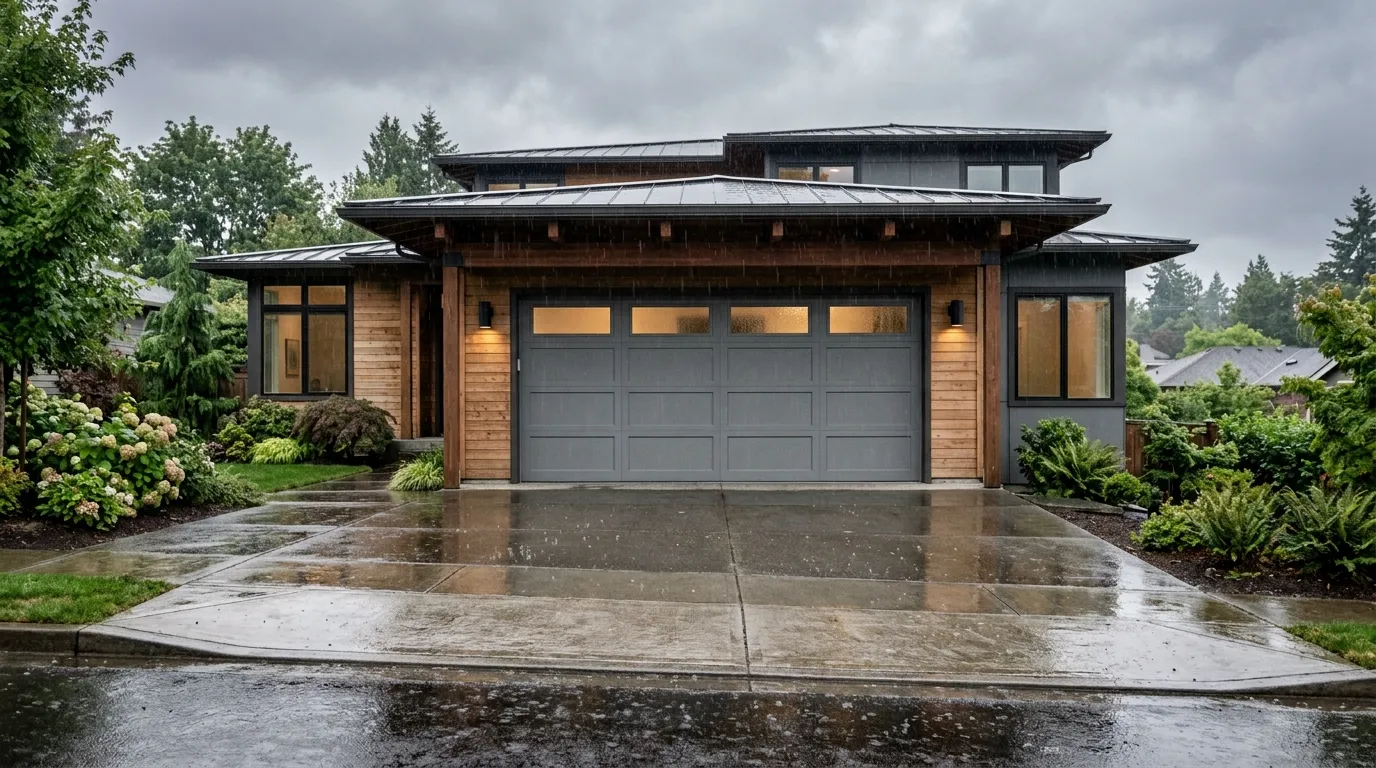
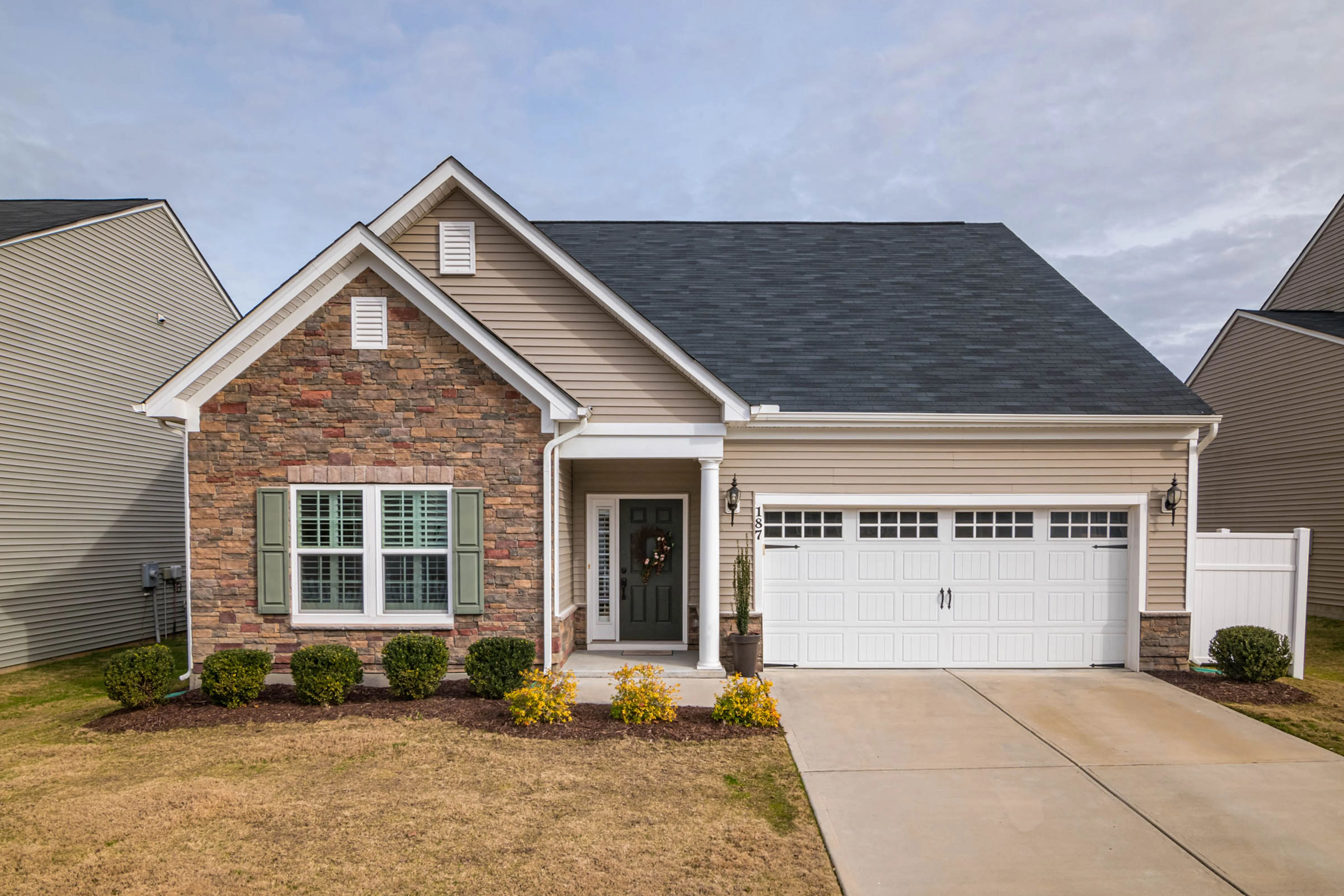
Most houses in this part of the service area went up between 1962 and 2005, with the median sitting around 1983. That's a specific problem for cables. A door built in the early 80s is on its second or third opener by now, but a lot of these homes still carry the original lift cables and drums, or a mismatched replacement set installed by whoever owned the house before. Galvanized aircraft cable doesn't last forever, and cable from the 1980s stock has usually seen forty-plus years of temperature swings.
The climate here is the other half of it. This is a cold, moderate band - not brutal, but wet enough and cold enough often enough that cables see repeated cycles of damp, rust, and stiffening. Moisture works into the strands where they wrap the drum, and a cable that looks fine from the ground can be down to a handful of intact wires at the pulley. That combination - older original hardware plus a damp cold climate - is why cable failure shows up here more than in a dry, newer-build market. It's not one dramatic storm. It's decades of small cycles finally reaching the end of a wire's life.
Houses built in the 90s aren't much safer. Builder-grade cable from that era was priced to meet code, not to outlast the house.
Warning signs
A cable rarely just snaps with no warning, though that does happen. More often you get one side of the door hanging lower than the other, a door that jerks or drags on one edge as it goes up, or a loud bang from the garage followed by the door refusing to move.
Sometimes it's frayed strands you can see fanning out near the drum if you look up while the door is open - that's a cable close to giving out.
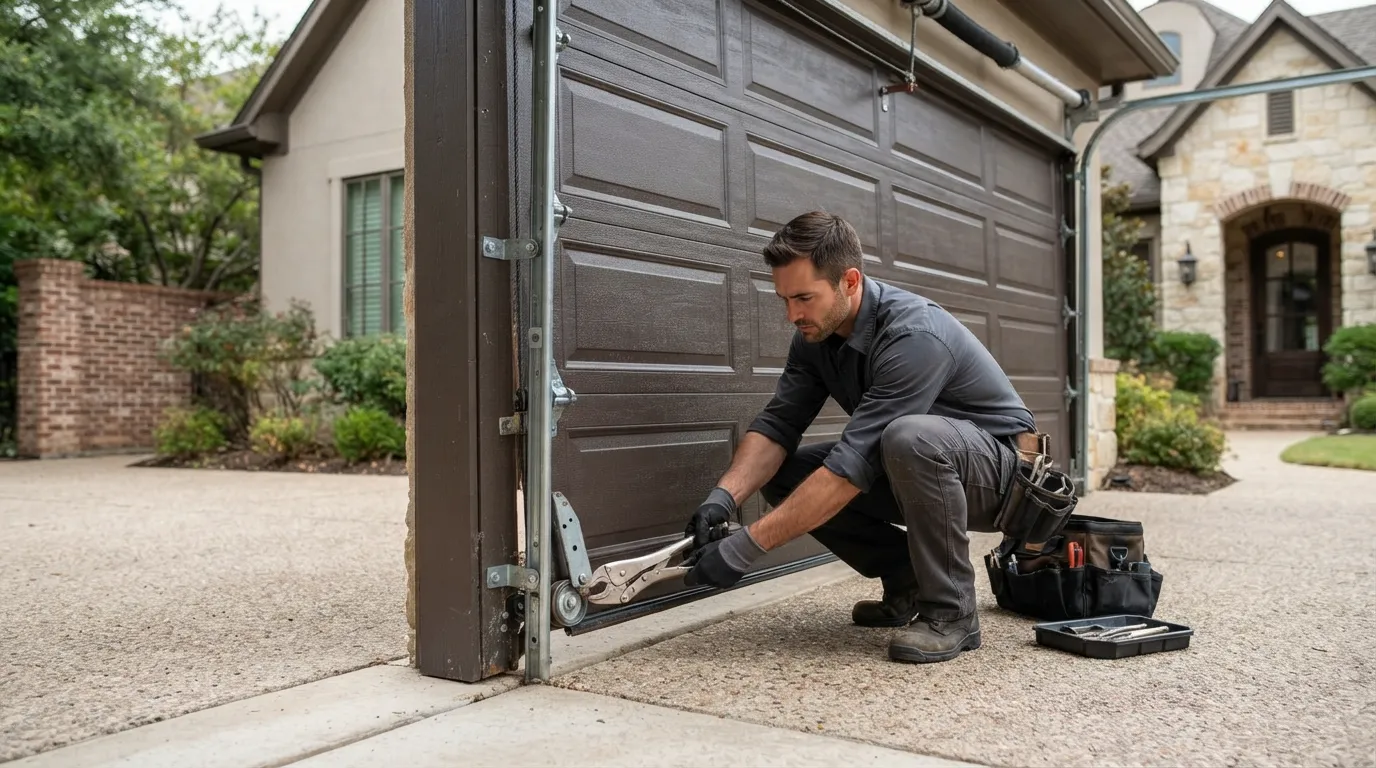
If a cable has already let go, the door will usually sit crooked in the opening, stuck partway, or drop hard and fast if the spring side goes with it.
Don't try to force it up by hand and don't run the opener again hoping it clears itself - a slack or broken cable under tension is how people get hurt and how a repair turns into a full door replacement.

The repair
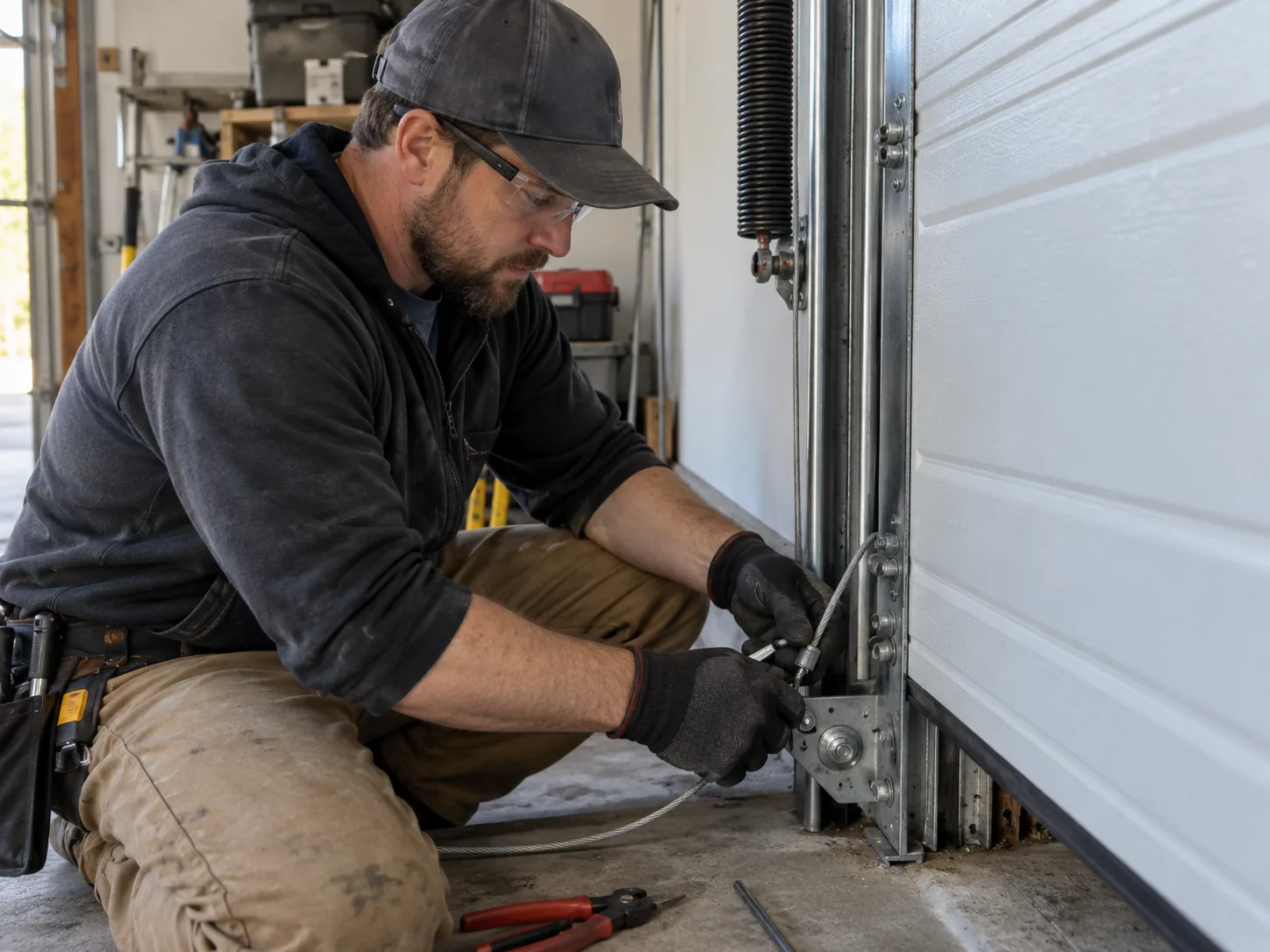
A straightforward cable repair means releasing tension safely, pulling the old cable off the drum and pulley, and running a new cable sized to match the door's weight and track length. On a torsion system that means winding down the spring first - this is not a job to do with the door under load. We check the drums and pulleys while we're in there, because a cable that failed from wear often means the drum grooves or pulley bearing are also on their way out, and putting new cable on worn hardware just buys you another failure sooner.
One honest limit here: if both cables are original and one has already gone, we'll usually recommend replacing both sides rather than just the failed one. Doing one side and leaving decades-old cable on the other means a second call in the near future, and that's not a good use of your money.
Timing
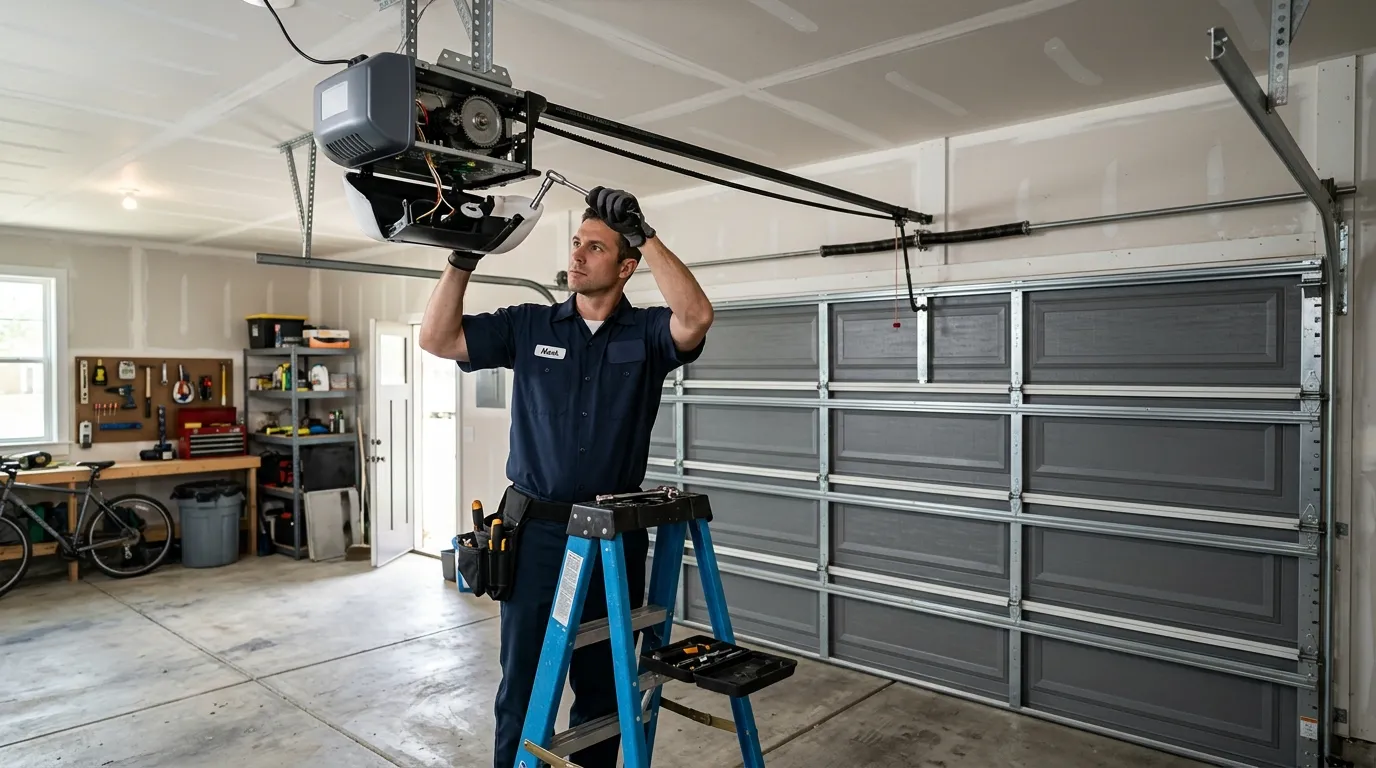
Most cable repairs are a single visit. Once the door and spring are safely secured, pulling old cable and installing new runs is mechanical work, not a lot of guesswork - the time goes into doing the tensioning and alignment right, not into the cable itself. What can add time is if the drums, pulleys, or track are also worn and need replacing, since that's more parts to source and fit correctly.
We're not going to quote a number here that isn't tied to your door - the frame size, spring type, and what else has worn out all change the job. What we can tell you is that we check the whole lift system, not just the broken cable, before we call it done.
Questions
Homes in this service area were mostly built between 1962 and 2005, with a lot of stock from the 1980s and 90s still running original or early-replacement cable. Combined with a cold, damp climate that cycles moisture into the strands, that cable simply reaches the end of its life more often than in newer construction.
No. A broken cable often means the door is holding only on spring tension or an uneven pull, and forcing the opener can drop the door or snap the remaining hardware. Leave it where it is and call for a repair rather than trying to clear it yourself.
If your cables are original and one has failed, we'll usually recommend replacing both. Leaving decades-old cable on the working side almost always means a second failure and a second service call within a short time.
No, though they can look similar from the driveway - a door stuck or hanging crooked. Springs lift the weight of the door; cables transfer that lift to the door itself. We check both, since a failure in one often stresses the other.
Explore more
Ready when you are
Tukwila Garage Door Pros repairs and installs garage doors, springs and openers in Tukwila, WA and the surrounding area.