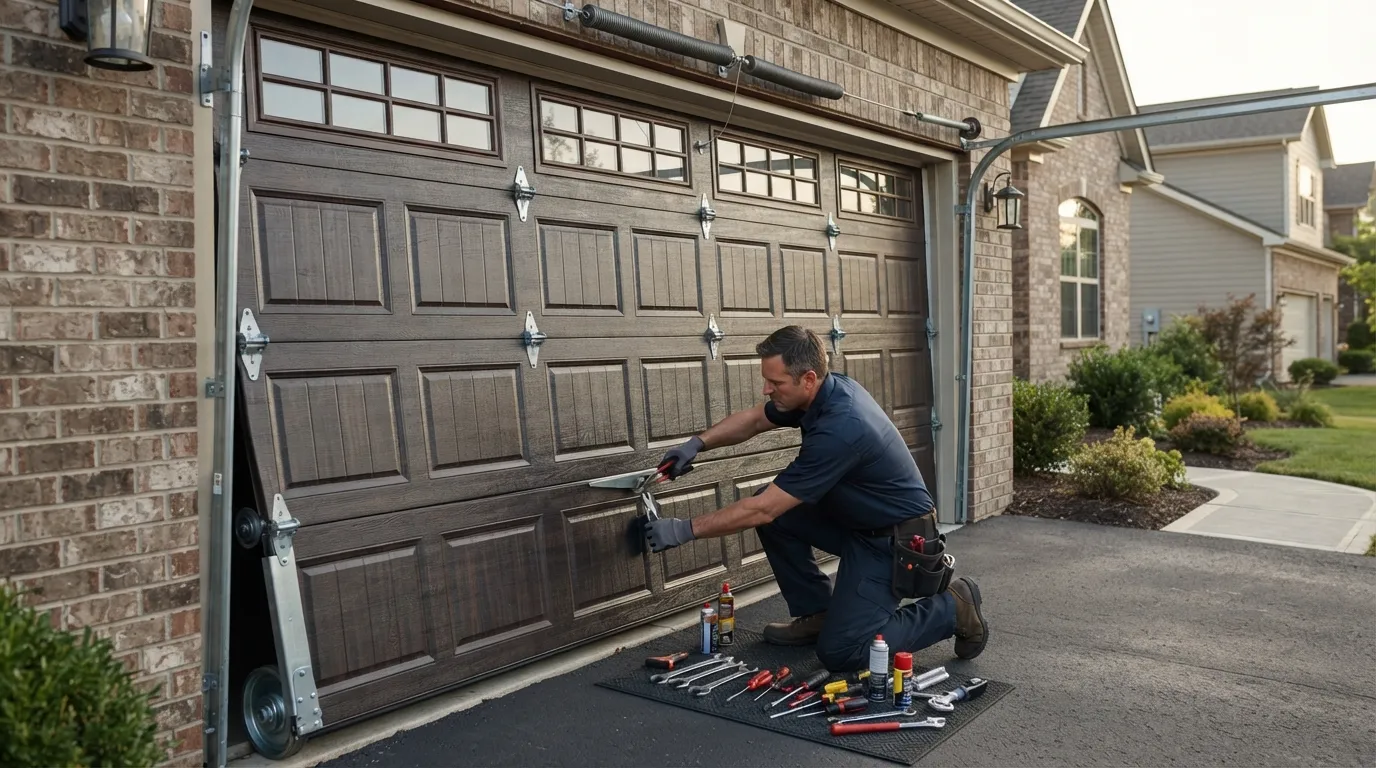
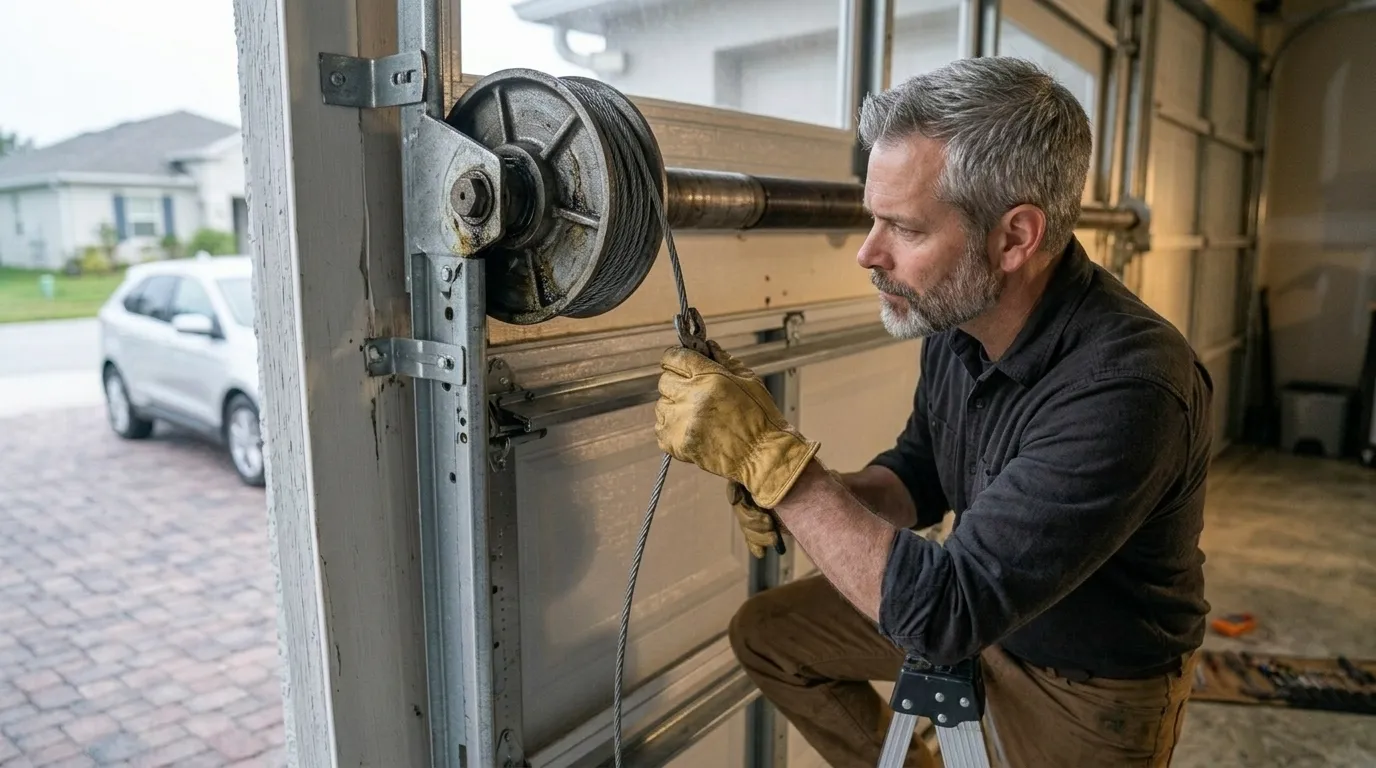
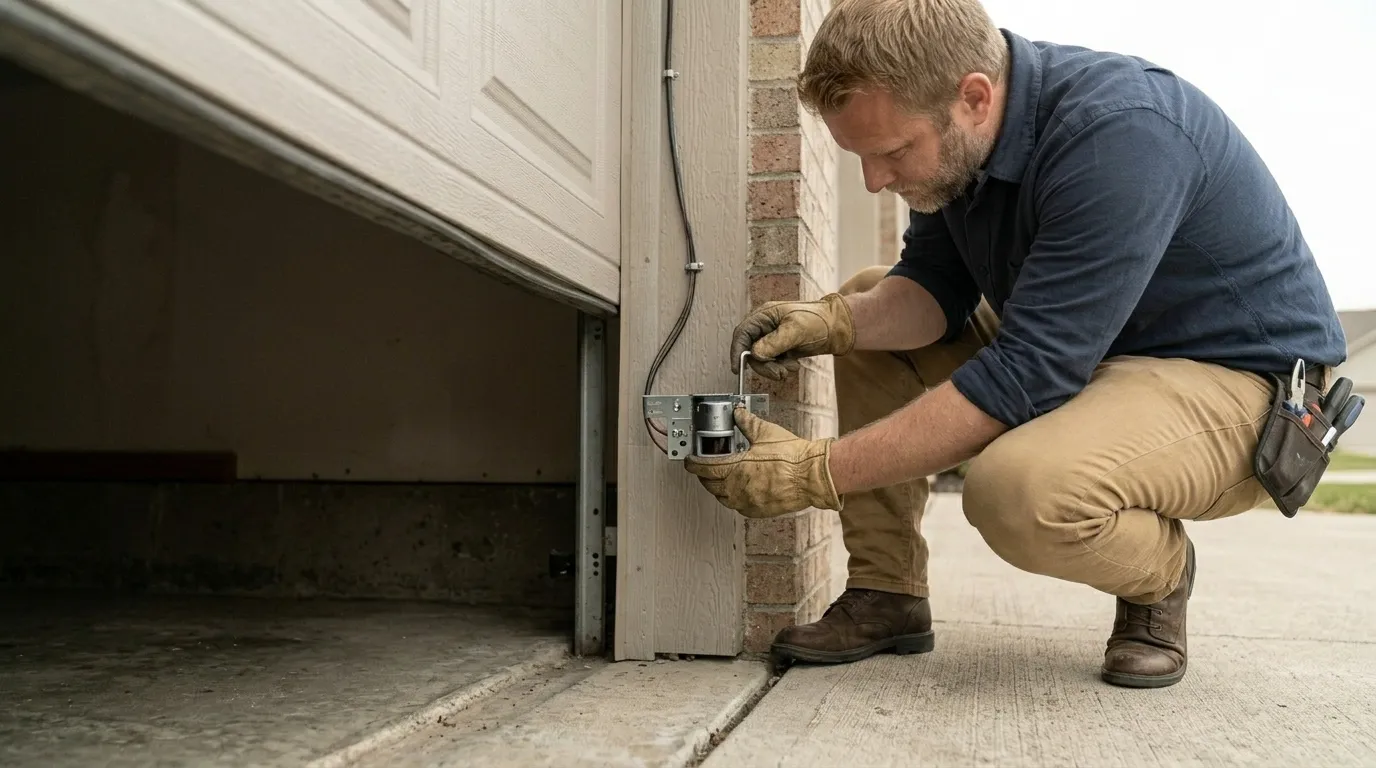
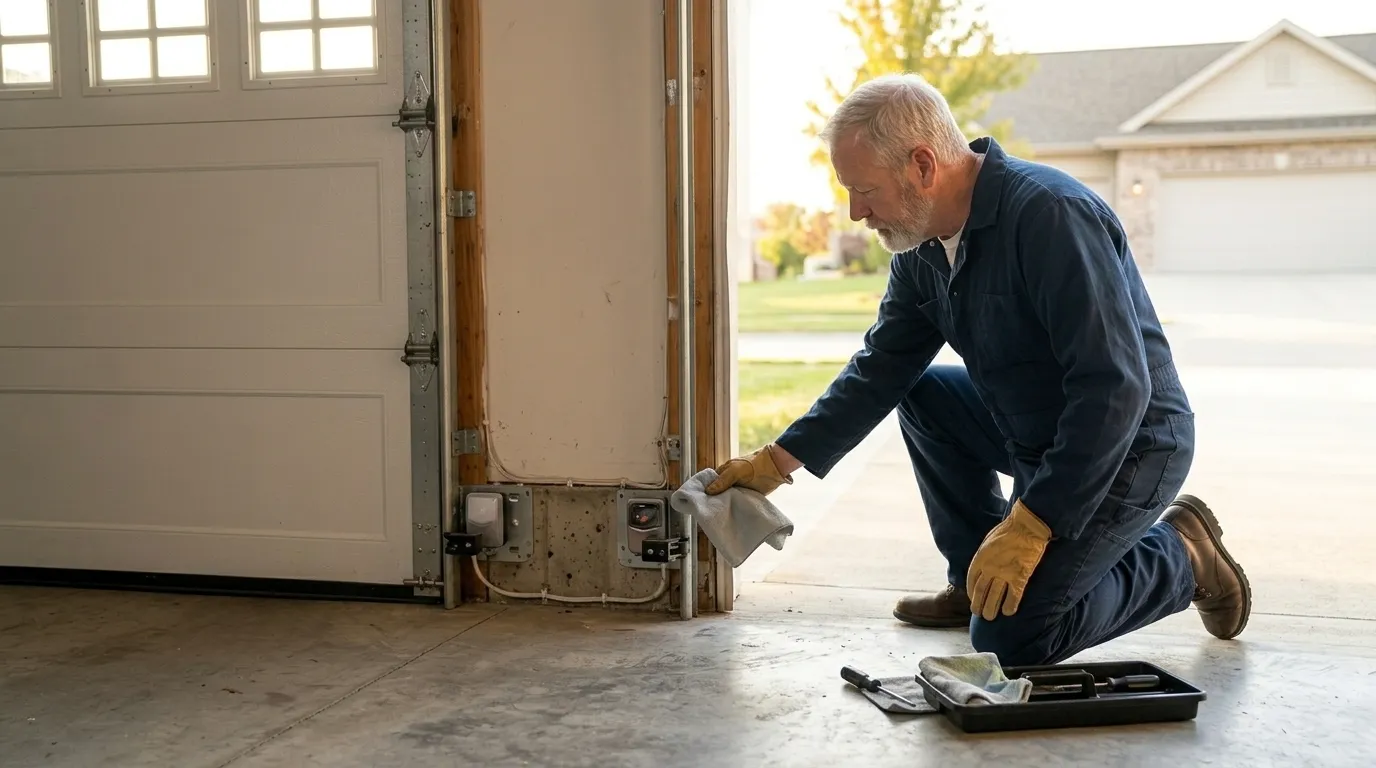
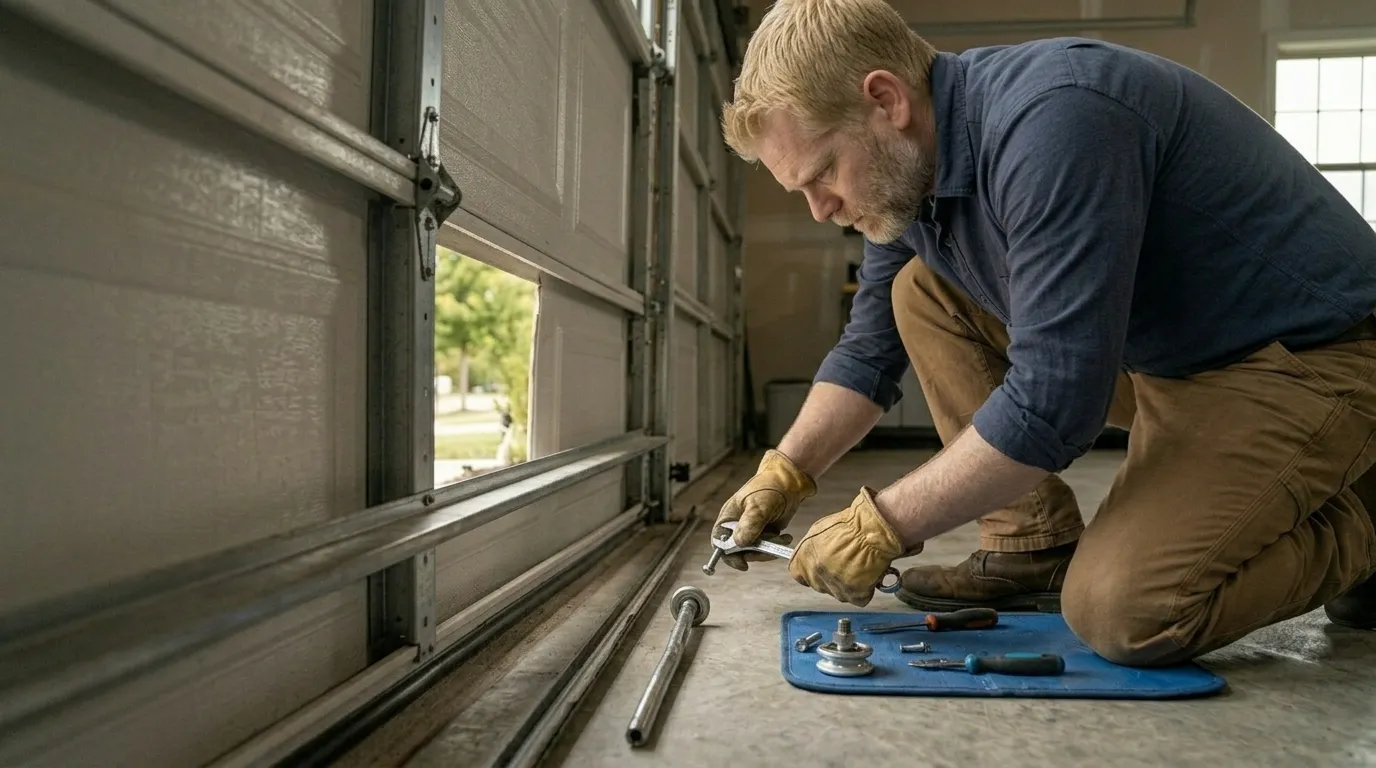
This region sits in a cold-moderate climate band, and that matters more for a 1994 steel door than it does for a newer insulated one. The freeze-thaw cycle through a Covington winter works into any spot where the factory paint seal has worn through - usually the bottom panel, where road spray and snowmelt sit longest. Once moisture gets under the galvanizing at a seam, the steel rusts from the inside out, and the panel goes brittle right along the fold line before it ever shows a visible crack on the surface.
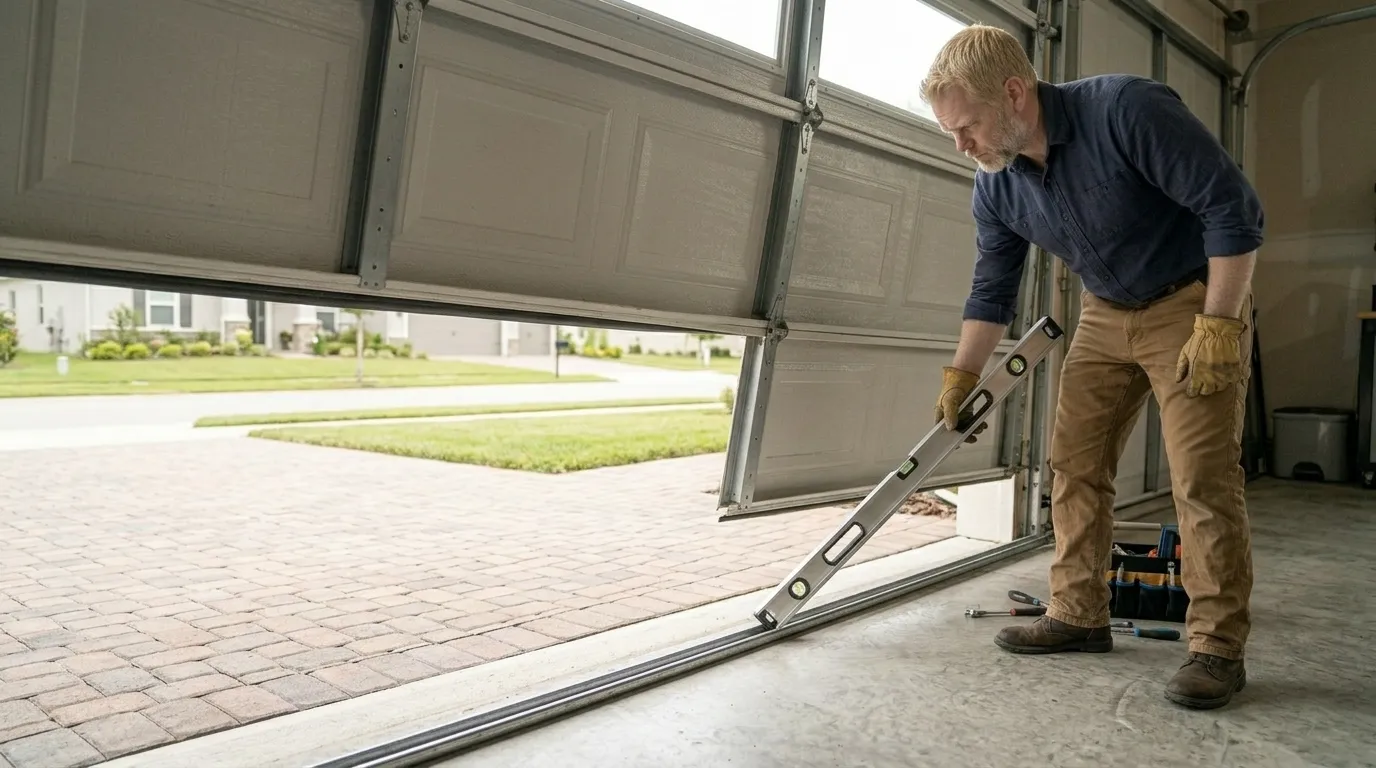
That's the failure pattern we see on doors from this build era across the area: not impact damage, but a bottom panel that's quietly corroded from repeated wet-dry cycles until a light knock - a bike, a bumper tap - splits it open. A door built to a newer insulated standard sheds that moisture differently and doesn't fail the same way, which is part of why this is a build-era problem, not a universal one.